





What's Happening?
dsm-firmenich is advancing its Protopia single-cell protein into industrial-scale production, with a 120,000-liter fermentation run scheduled for later this year. The company plans to establish a larger production facility in Europe by 2027. Protopia,
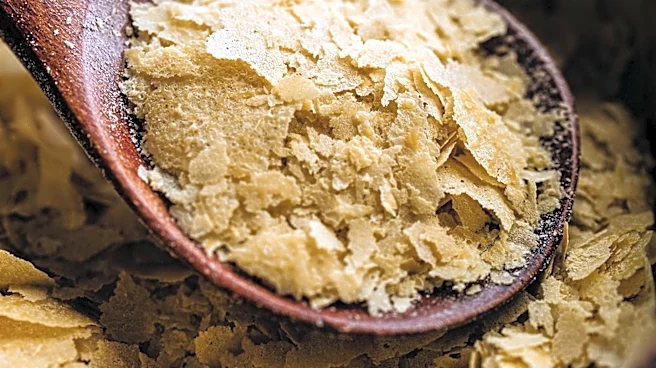
derived from a highly optimized yeast strain (Cyberlindnera jadinii), is designed to be a cost-effective and efficient protein source. This yeast strain is feedstock-agnostic, capable of utilizing various substrates like ethanol, methanol, acetate, and sugar, and boasts 2-3 times the productivity of most liquid biomass fermentation systems. The goal is to compete directly with fishmeal in aquaculture and whey in human nutrition. dsm-firmenich aims to produce 400-500 tons of Protopia annually starting mid-next year to seed the market and support customer trials, while also pursuing a licensing model for broader expansion. The product contains a minimum of 70% protein with a high protein digestibility score, making it a viable alternative to traditional protein sources.
Why It's Important?
The industrial-scale production of Protopia yeast protein holds significant implications for global food security and sustainable resource management. In the aquaculture sector, particularly salmon production, rising fishmeal prices and concerns over availability, exacerbated by events like El Niño, create an urgent need for alternative feed sources. Protopia offers a direct 1:1 replacement for fishmeal, providing a stable and nutritionally equivalent option that can help mitigate supply chain vulnerabilities and reduce reliance on wild-caught fish for feed. For human food, Protopia presents a neutral-tasting, high-protein ingredient that can be incorporated into various products, addressing the growing demand for alternative proteins and offering a competitive solution to the high cost and limited availability of whey protein. This development could also create new revenue streams, such as for Indian ethanol producers with underutilized capacity, by providing a novel application for their existing infrastructure. The regulatory status of Cyberlindnera jadinii, with its long history of food use in the US and EU, facilitates its market entry without requiring new GRAS notices or novel food authorizations, accelerating its potential impact.
What's Next?
dsm-firmenich plans to conduct a 120,000-liter fermentation run this year to prove out the bioprocess at scale and generate product for market testing. Following this, a larger facility in Europe is slated for 2027, with an initial production target of 2,000–10,000 tons per year. The company intends to produce 400–500 tons from mid-next year to support customer trials and initiate licensing agreements in three countries. The long-term strategy involves a licensing model where local production partners would manufacture and sell Protopia, with dsm-firmenich providing the strain, process technology, and technical support. Key target markets for this expansion include Brazil, China, and the US, in addition to Europe and India, focusing on regions with cheap feedstocks, existing fermentation infrastructure, or low-cost renewable energy. The company is also exploring applications in pet food and various human food products, from snacks to meat alternatives and protein-fortified beverages, engaging with major food companies for potential collaborations.
Beyond the Headlines
The scaling of Protopia highlights a broader trend in the food industry towards biomanufacturing and single-cell proteins as sustainable alternatives. This approach offers a more efficient and environmentally friendly way to produce large volumes of protein compared to traditional agriculture and animal farming. The feedstock-agnostic nature of dsm-firmenich's yeast strain underscores the potential for circular economy models, utilizing agricultural byproducts or industrial waste streams as inputs. This could significantly reduce the environmental footprint of protein production, addressing concerns related to land use, water consumption, and greenhouse gas emissions. Furthermore, the licensing model proposed by dsm-firmenich could democratize access to advanced protein production technologies, fostering local economies and enhancing food security in diverse regions. The success of Protopia could accelerate investment and innovation in the broader alternative protein sector, pushing the boundaries of what is possible in sustainable food systems and potentially reshaping global protein supply chains.