






What's Happening?
Successful home composting of certified compostable products requires careful attention to product certification and composting methods. Products certified for industrial composting are not guaranteed to break down in a backyard pile, which operates at significantly
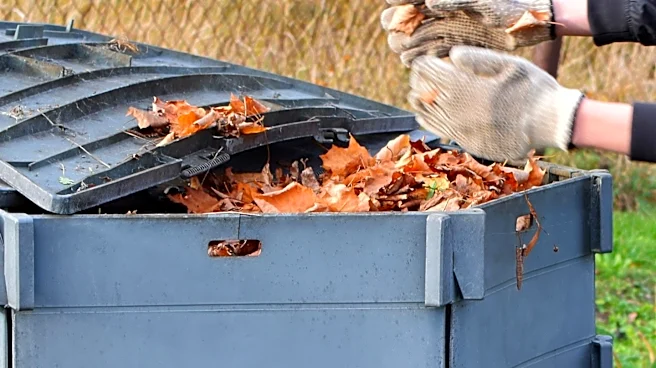
lower temperatures. Home composting systems typically run only a few degrees above ambient air temperature, unlike industrial facilities that maintain temperatures between 131-140°F. Therefore, consumers should look for products specifically labeled with a 'home-compostable' certification. Even with the correct products, microbial activity in backyard piles is heavily influenced by seasonal weather changes, slowing down in colder months. To optimize the process, a compost bin needs adequate airflow, a balanced mix of 'greens' (food scraps) and 'browns' (dry leaves, cardboard), consistent moisture, and weekly mixing. Rigid items should be broken into smaller pieces to increase surface area for microbial action. While home composting can take 6 to 12 weeks, or even up to a year for full breakdown, this is significantly faster than the centuries it takes for conventional plastics to fragment into microplastics.
Why It's Important?
The distinction between industrial and home compostable certifications is crucial for consumers aiming to reduce waste effectively. Misunderstanding these differences can lead to frustration when products fail to decompose as expected in backyard settings, potentially undermining confidence in compostable alternatives. This issue impacts the broader waste management landscape by highlighting the need for clearer labeling and consumer education. For the environment, successful home composting diverts organic waste from landfills, where it would otherwise produce methane, a potent greenhouse gas. By converting food scraps and certified packaging into nutrient-rich soil, individuals contribute to soil health, reduce the need for chemical fertilizers, and promote a circular economy. The effectiveness of home composting also influences the market for compostable products, as consumer satisfaction drives demand and further innovation in materials designed for lower-temperature decomposition.
What's Next?
To improve home composting success rates, increased consumer education on product certifications and best practices is essential. Manufacturers of compostable products may need to enhance labeling clarity, explicitly distinguishing between industrial and home compostable items and providing clear instructions for home use. Local municipalities and environmental organizations could expand workshops and resources, like those offered in Pasadena, to guide residents on proper composting techniques and the selection of appropriate materials. Further research and development in materials science are expected to yield more advanced compostable polymers that can break down efficiently across a wider range of home composting conditions. As awareness grows, there may be a push for standardized national guidelines or clearer regulatory frameworks for compostable product labeling to prevent consumer confusion and ensure environmental benefits are fully realized.
Beyond the Headlines
The challenges in home composting underscore a broader societal tension between convenience and environmental responsibility. While the idea of 'compostable' products offers an appealing solution to plastic pollution, the reality requires active participation and understanding from consumers. This highlights a gap in public knowledge regarding the nuances of waste decomposition and material science. Ethically, manufacturers have a responsibility to provide transparent information about product end-of-life, preventing 'greenwashing' where products are marketed as eco-friendly without clear instructions for proper disposal. Legally, evolving regulations around environmental claims may push for stricter standards on compostable labeling. Culturally, successful home composting fosters a deeper connection to natural cycles and resource management, potentially shifting consumer behavior towards more sustainable practices and a greater appreciation for the effort involved in closing the loop on waste.