
What's Happening?
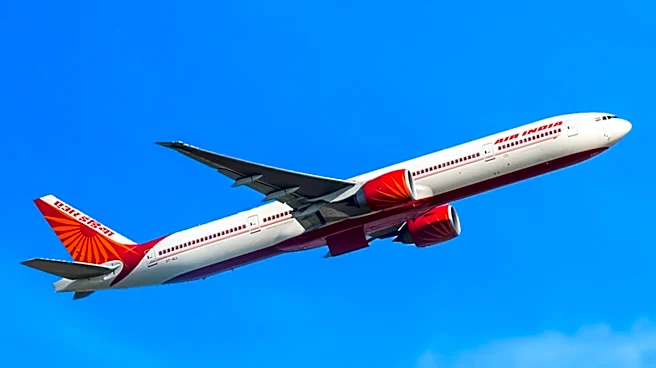
Air India has reinstated its non-stop flight services between India and the United States, significantly cutting travel time by approximately three hours. This restoration follows the reopening of Iraqi
airspace to civilian aircraft, which allows Air India to bypass a refueling stop in Rome. The airline resumed direct operations from Mumbai and New Delhi on November 5, 2026, after a decade-long restriction on using Iraqi airspace was lifted. The change has reduced the journey duration from about 21 hours to 18 hours. Under the revised route, flights from New Delhi now traverse over Rajasthan, Gujarat, Oman, the UAE, Kuwait, and Iraq before continuing over Turkey and Europe en route to the U.S. Previously, these flights took a longer path over Oman, Yemen, and southern Saudi Arabia, necessitating a stop in Rome. Air India operates four flights on these routes, with two serving John F. Kennedy International Airport in New York and two flying to Newark Liberty International Airport.
Why It's Important?
The restoration of non-stop flights between India and the U.S. by Air India is important for several reasons. For U.S. travelers and the Indian diaspora, it means a more convenient and shorter journey, enhancing connectivity between the two nations. This move also allows Air India to regain a competitive edge against major Gulf carriers like Emirates, Qatar Airways, and Etihad Airways, which typically operate flights to the U.S. with stopovers in their respective Gulf countries. While the shorter route offers greater flexibility in route planning, an airline source noted that the need to carry additional fuel for non-stop operations might lead to a 'payload penalty,' potentially requiring reductions in passenger or cargo capacity. Despite this, the elimination of the technical stop in Rome is expected to improve the overall travel experience and efficiency for passengers and cargo alike, fostering stronger economic and cultural ties between India and the U.S.
What's Next?
The immediate consequence of this route change is a more streamlined travel experience for passengers flying between India and the U.S. Air India will likely monitor the operational efficiency and passenger feedback from these restored non-stop flights. The airline's ability to compete more effectively with Gulf carriers could lead to increased market share on these lucrative routes. Future developments might include adjustments to flight schedules or capacity based on demand and operational performance. The reopening of Iraqi airspace could also pave the way for other airlines to explore similar route optimizations, potentially leading to broader changes in international flight paths and increased competition in the aviation sector serving the U.S. and India.
Beyond the Headlines
The reopening of Iraqi airspace for civilian flights, a critical factor in Air India's route optimization, signifies a broader shift in regional stability and air travel geopolitics. For a decade, geopolitical tensions and security concerns in the Middle East forced airlines to adopt longer, less efficient routes. The ability to traverse Iraqi airspace suggests an improvement in the perceived security landscape, which could have wider implications for international aviation. This development not only impacts commercial airlines but also reflects evolving diplomatic relations and security cooperation in the region. The long-term implications could include a re-evaluation of established flight corridors and potentially more direct and fuel-efficient routes for numerous international carriers, influencing global air travel patterns and operational costs.