



What's Happening?
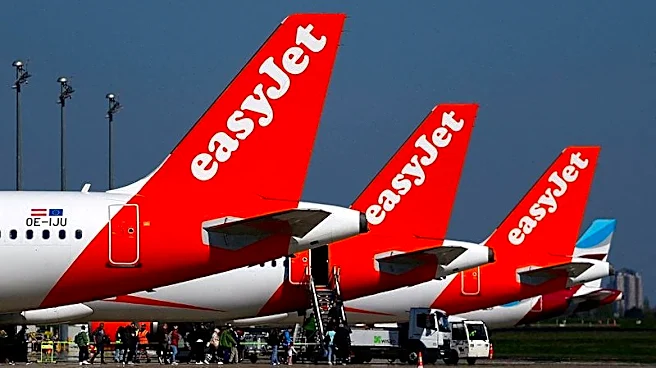
Apollo Global Management has agreed to purchase EasyJet for £5.7 billion (approximately $7.7 billion), a move expected to significantly impact the competitive landscape of low-cost airlines in Europe. The private equity firm will pay 715 pence per share
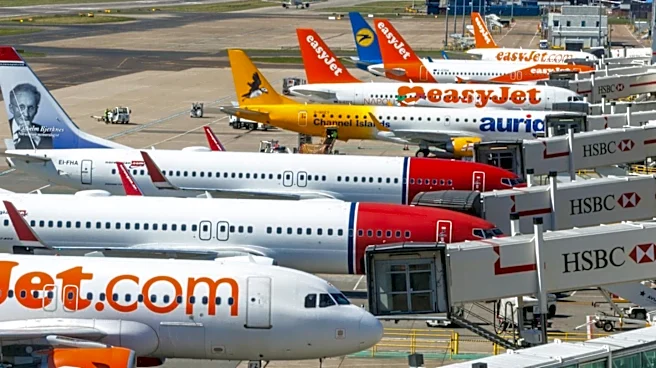
in cash, following a period of negotiations and a competitive bid process. Previously, Castlelake LP had withdrawn from the bidding after Apollo's higher offer. The acquisition includes EasyJet's fleet of modern Airbus SE A320 jets and valuable airport slots in high-demand locations such as London, Milan, and Geneva. The deal, which has been unanimously recommended by EasyJet's board, is seen as a strategic move by Apollo to support EasyJet's current management strategy and growth plans.
Why It's Important?
This acquisition is significant as it highlights the ongoing consolidation in the airline industry, particularly among low-cost carriers. For Apollo, this deal represents an opportunity to expand its footprint in the aviation sector, leveraging EasyJet's established market presence and operational assets. The transaction could lead to increased competition in the European airline market, potentially affecting pricing and service offerings. Additionally, the deal underscores the strategic interest of U.S.-based investment firms in European markets, which may influence future cross-border investments and mergers. Stakeholders such as passengers, employees, and competitors will be closely watching the integration process and any changes in EasyJet's operational strategy.
What's Next?
Following the acquisition, Apollo will need to navigate regulatory approvals and address any concerns related to ownership and control, given the European Union's rules on airline ownership. The firm has committed to maintaining EasyJet's headquarters in London and honoring existing employee contracts. As the deal progresses, Apollo's ability to integrate EasyJet's operations and realize synergies will be critical. The market will also be attentive to how Apollo manages potential regulatory hurdles and the strategic direction it sets for EasyJet in the competitive low-cost airline sector.