





What's Happening?
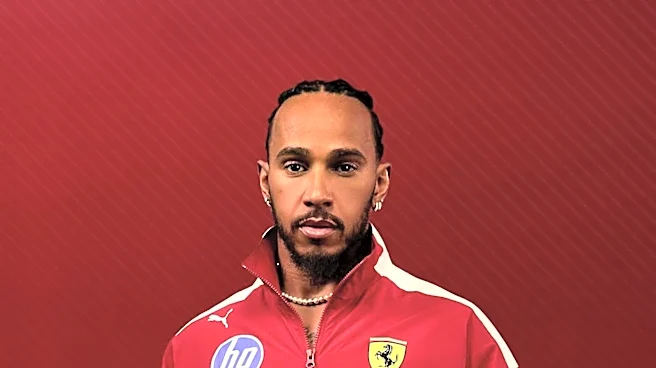
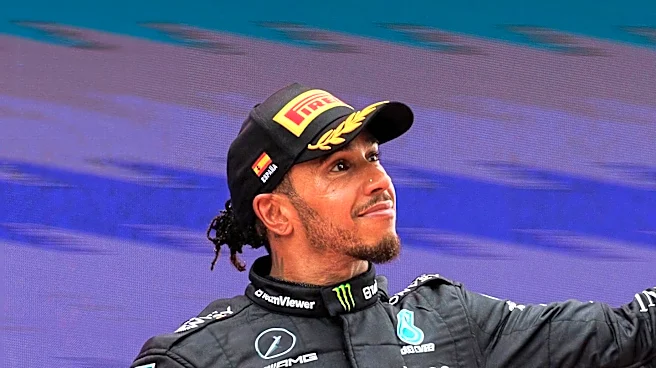
Lewis Hamilton, at 41 years old, has reached a significant milestone in his Formula 1 career, completing over 400 Grands Prix. This achievement, made with Ferrari at the Sao Paulo Grand Prix, makes him only the second driver in F1 history to do so, following
Fernando Alonso. Unlike Alonso, Hamilton achieved this in an unbroken run of 20 consecutive seasons. His continued competitive performance, particularly against younger drivers like Charles Leclerc, has drawn attention and admiration. McLaren driver Lando Norris has publicly acknowledged Hamilton's sustained form, stating that it has influenced his own perspective on the potential length of his F1 career. Norris expressed surprise and admiration for Hamilton's ability to remain at the forefront of the sport, consistently delivering strong performances and challenging top competitors.
Why It's Important?
Lewis Hamilton's enduring presence and competitive edge in Formula 1 at an advanced age for the sport carry significant implications for driver career longevity and team strategies. His performance challenges the conventional wisdom about the peak age for F1 drivers, potentially encouraging teams to invest in and retain experienced talent for longer periods. For younger drivers like Lando Norris, Hamilton's example provides a tangible model of sustained excellence, suggesting that a career at the top of motorsport can extend well beyond what was previously considered typical. This could influence how young drivers approach their physical and mental conditioning, aiming for a longer professional lifespan. Furthermore, Hamilton's continued success with Ferrari, a team he recently joined, highlights the adaptability and enduring skill of top-tier athletes, impacting team dynamics and driver market value.
What's Next?
As Lewis Hamilton continues his career with Ferrari, the focus will likely remain on his performance relative to younger teammates and competitors. His ongoing participation could set new benchmarks for driver longevity and success in Formula 1. For Lando Norris and other younger drivers, Hamilton's career trajectory may serve as a long-term goal, influencing their training regimens and career planning. The sport itself might see a shift in how driver contracts and development programs are structured, with a greater emphasis on extending careers. Future seasons will reveal whether Hamilton can maintain his competitive edge and potentially add more records to his already illustrious career, further solidifying his legacy and impacting the aspirations of current and future F1 talents.
Beyond the Headlines
Lewis Hamilton's sustained success transcends mere sporting achievement; it delves into broader discussions about human performance, aging, and the psychological aspects of elite competition. His ability to maintain peak physical and mental condition at 41 in a demanding sport like F1 challenges societal perceptions of age-related decline. This could have cultural implications, inspiring individuals in various high-pressure professions to extend their careers and redefine what's possible. Ethically, it raises questions about the balance between experience and youth in competitive environments, and how organizations value and nurture both. His journey also highlights the importance of continuous adaptation and resilience, offering a powerful narrative beyond the racetrack about overcoming challenges and maintaining excellence over decades.