







What's Happening?
A new study has found that just a few minutes of high-intensity sprinting can be more beneficial for heart health and biological age than longer, moderate workouts. Researchers at Rockefeller University examined participants' responses to different exercise
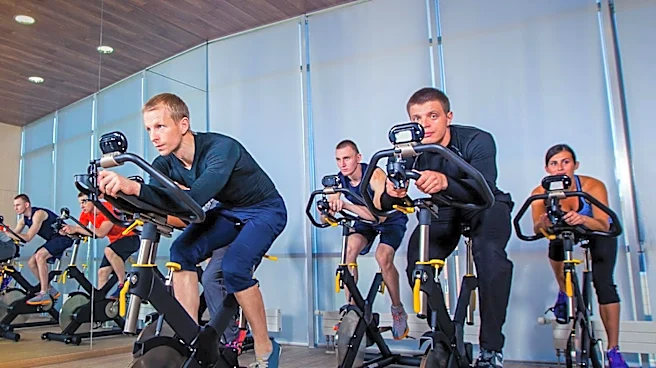
intensities. One group performed six 30-second cycle sprints, while another engaged in a 90-minute moderate cycling workout. The study, published in Cell Reports Medicine, revealed that the sprints significantly altered over 200 metabolites and increased levels of key proteins involved in blood vessel growth, tissue remodeling, and hormonal signaling. In contrast, moderate exercise had a much smaller impact on these molecular responses. The proteins affected by sprinting were also linked to a lower risk of cardiovascular and metabolic diseases, including type 2 diabetes, and a slower biological aging process.
Why It's Important?
This research has significant implications for public health recommendations and the fitness industry in the U.S. It suggests that time constraints, often cited as a barrier to exercise, may be overcome by incorporating short bursts of high-intensity activity. This could make exercise more accessible and appealing to a broader population, potentially leading to improved cardiovascular health and reduced risk of chronic diseases nationwide. For fitness professionals and health programs, the findings provide evidence to support the integration of high-intensity interval training (HIIT) into routines, emphasizing efficiency and potent physiological benefits. This could also influence the design of fitness equipment and digital workout programs, focusing on short, impactful sessions. The link to slower biological aging further underscores the profound, long-term health benefits of this type of exercise.
What's Next?
Future research is needed to determine how these findings apply to women and less physically active individuals, as the initial study was conducted solely on men. This will be crucial for developing inclusive and effective exercise guidelines. We can expect to see an increased emphasis on high-intensity, short-duration workouts in fitness trends and public health campaigns. Personal trainers and fitness apps may further specialize in guiding individuals through safe and effective sprinting protocols, whether on treadmills, stationary bikes, or rowers. The study's authors, including Paul Cohen, anticipate that the observed molecular responses are intrinsic to intense exercise, suggesting continued exploration into the mechanisms behind these benefits. This could lead to a deeper understanding of exercise physiology and more targeted interventions for improving health.
Beyond the Headlines
The study's findings challenge the long-held belief that significant health benefits require extensive workout durations, potentially democratizing access to effective exercise. By demonstrating that 'a few minutes' can trigger 'a significant molecular response,' it empowers individuals with busy schedules to prioritize their health. This could lead to a cultural shift where short, intense physical activity becomes a more normalized and accepted part of daily routines, rather than an exception. The focus on molecular changes and biological aging also highlights the sophisticated ways exercise impacts our bodies at a cellular level, moving beyond superficial metrics of fitness. This deeper understanding could foster a more informed approach to personal health, encouraging individuals to consider the profound internal benefits of even brief, intense physical efforts.