






What's Happening?
BioWorks has launched BioRain Ax, a new microbial inoculant designed to help crops better withstand limited-water conditions, improve plant health, and increase yield potential. This product is formulated for use in outdoor specialty crops, ornamentals,
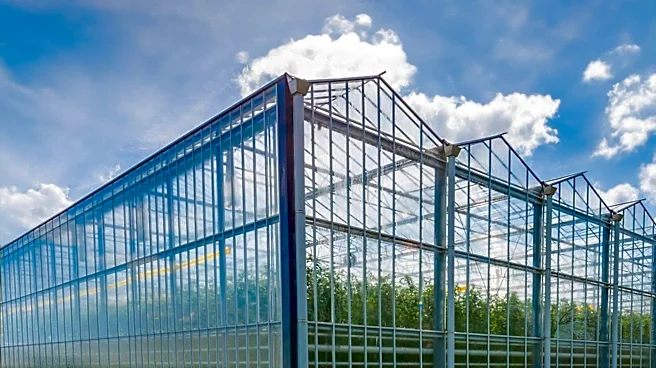
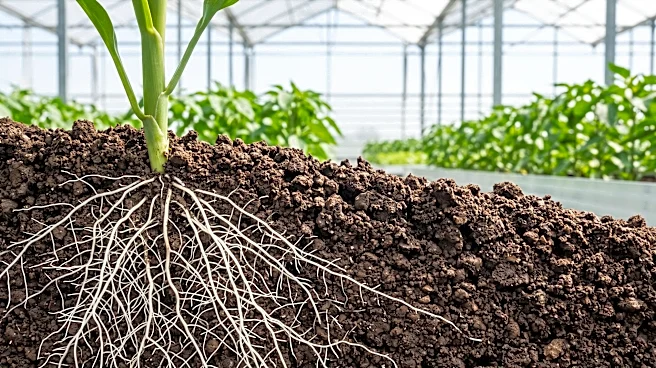
greenhouses, nurseries, and other high-value crop production systems across the United States, with the exception of California. BioRain Ax contains a blend of beneficial microorganisms, including Priestia megaterium, Bacillus subtilis, and Bacillus paralicheniformis. These microorganisms work by colonizing the plant's rhizosphere, which is the soil area directly influenced by root secretions. Their function is to enhance soil structure, improve water retention, and boost nutrient availability, thereby supporting robust root development and enabling plants to access water and nutrients more efficiently. The product is available as a liquid formulation and can be applied through soil or irrigation systems, allowing for seamless integration into existing crop protection programs.
Why It's Important?
The introduction of BioRain Ax is significant for the U.S. agricultural sector, particularly as growers face increasing challenges from water scarcity and drought conditions. By improving water-use efficiency and helping crops manage drought stress, this product offers a practical tool to protect yields and maintain plant health in water-limited environments. This is crucial for the economic stability of specialty crop producers, who often operate with tight margins and are highly susceptible to environmental stressors. The ability to integrate BioRain Ax into current crop protection programs without extensive modifications makes it an accessible solution for many growers. Furthermore, the focus on biological solutions aligns with a growing industry trend towards sustainable agriculture and reduced reliance on synthetic chemicals, potentially leading to healthier ecosystems and more resilient food systems. The product's success could mitigate financial losses for farmers and contribute to more consistent agricultural output.
What's Next?
BioWorks will likely focus on expanding the adoption of BioRain Ax among U.S. growers, emphasizing its benefits in improving crop performance under drought and transplant stress. The company may conduct further field trials across various crop types and growing conditions to demonstrate the product's versatility and effectiveness, building on the reported success in watermelon trials. Educational initiatives for growers on optimal application methods and integration into existing practices will also be crucial. As climate change continues to impact agricultural regions with more frequent and severe droughts, demand for such water-stress mitigation solutions is expected to rise. BioWorks may also explore opportunities to expand the product's availability to California, pending regulatory approvals, given the state's significant agricultural output and persistent water challenges. Continued research into the specific microbial interactions and their long-term effects on soil health and crop resilience could also be a future direction.
Beyond the Headlines
The launch of BioRain Ax underscores a broader shift in agricultural innovation towards biological and nature-based solutions. This trend reflects a growing recognition of the limitations and environmental impacts of conventional chemical-intensive farming. The product's reliance on beneficial microorganisms highlights the potential of harnessing natural processes to address complex agricultural challenges like water scarcity. This approach not only aims to improve crop resilience but also contributes to the overall health of agricultural ecosystems by fostering better soil structure and nutrient cycling. The development of such solutions could lead to a more sustainable and environmentally friendly agricultural industry, reducing the ecological footprint of food production. It also signals a move towards integrated pest and disease management strategies that prioritize long-term ecological balance over short-term fixes, potentially influencing future agricultural policies and research funding priorities.