





What's Happening?
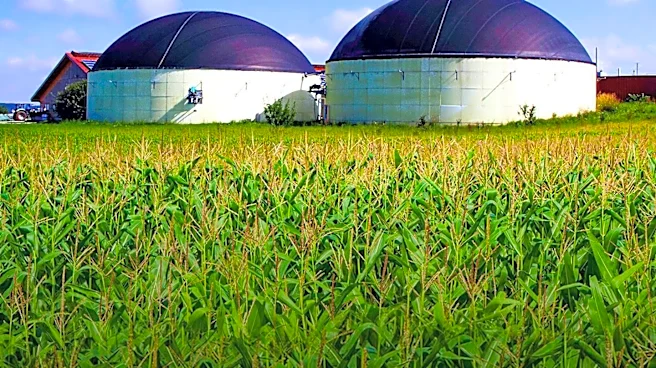
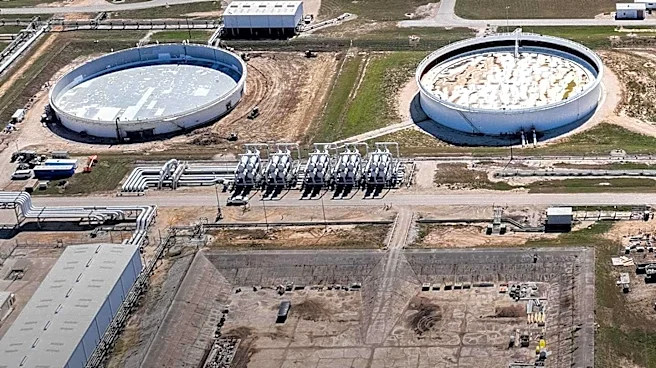
Montauk Renewables has inaugurated a new $200 million facility in Sampson County, North Carolina, dedicated to converting swine waste into renewable natural gas (RNG) and electricity. This project transforms a former distribution center into an agricultural
waste management and renewable energy operation. The facility captures methane from swine manure, preventing its release into the atmosphere, and processes it into usable energy. Additionally, the process yields biochar, a solid residue that enhances soil nutrient and water retention. Montauk Renewables has secured long-term agreements with over 80 farming locations in Sampson County, providing access to approximately 415,000 hog spaces for the initial phase of development. This initiative is part of Montauk's broader operations, with 14 projects across the United States and ongoing developments in several states, leveraging over 30 years of experience in landfill methane and agricultural biogas systems. The project aims to address the significant waste streams generated by North Carolina's agricultural sector, which is the state's top industry with an annual economic impact exceeding $100 billion.
Why It's Important?
This facility represents a significant step in addressing the environmental impact of concentrated animal agriculture in the U.S., particularly in states like North Carolina where swine production is a major industry. By converting swine waste into renewable energy, the project directly tackles methane emissions, a potent greenhouse gas, contributing to climate change mitigation efforts. The generation of biochar as a co-product offers additional environmental benefits by improving soil health and reducing the need for synthetic fertilizers, which can have their own environmental footprints. Economically, the project generates revenue from renewable energy products, supported by federal and state policies that incentivize renewable energy production, thereby fostering growth in the green energy sector. It also provides a new income stream for farmers participating in the program, strengthening the agricultural economy. The facility's opening signals a growing commercial interest in agricultural biogas projects across the U.S., demonstrating a viable model for sustainable waste management and energy production that can be replicated in other regions with similar agricultural profiles.
What's Next?
The Montauk Renewables facility is expected to continue its initial phase of operation, integrating more farming locations and optimizing its biogas conversion processes. The success of this project could encourage further investment and development in agricultural biogas technologies across the United States, particularly in areas with high concentrations of animal agriculture. Policymakers and environmental agencies will likely monitor the facility's impact on methane emission reduction and its contribution to renewable energy targets. The biochar produced will be evaluated for its long-term benefits to soil health and crop yields, potentially leading to wider adoption of this soil amendment. The project's model, which leverages environmental attribute premiums, may influence future federal and state policies designed to incentivize sustainable agricultural practices and renewable energy generation. Continued research and development in biogas capture and conversion technologies will likely follow, aiming to improve efficiency and expand the scope of such projects.
Beyond the Headlines
The Montauk Renewables project highlights a critical intersection of environmental sustainability, agricultural economics, and energy independence. Beyond the immediate benefits of waste-to-energy conversion, it underscores a shift towards more circular economic models within agriculture, where waste products are re-envisioned as valuable resources. This approach can reduce the ecological footprint of livestock farming, which is often criticized for its environmental impact, and foster a more resilient agricultural system. The integration of biochar production also points to a broader trend in regenerative agriculture, focusing on soil health and carbon sequestration. Ethically, such projects address the responsibility of large-scale agricultural operations to manage their waste sustainably, potentially improving community relations and public perception. The project also demonstrates how market-based incentives, such as environmental attribute premiums, can drive innovation and investment in sustainable technologies, offering a pathway for private sector engagement in addressing complex environmental challenges.