


What's Happening?
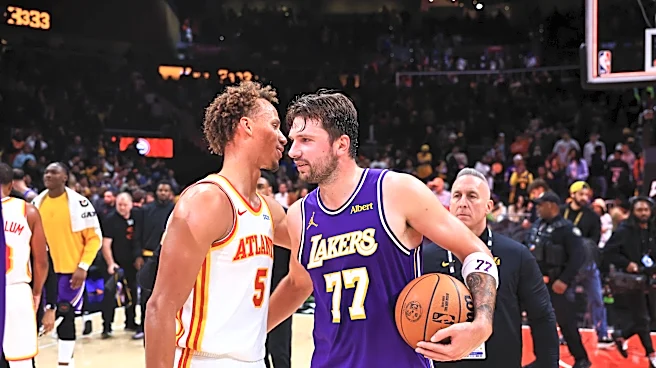
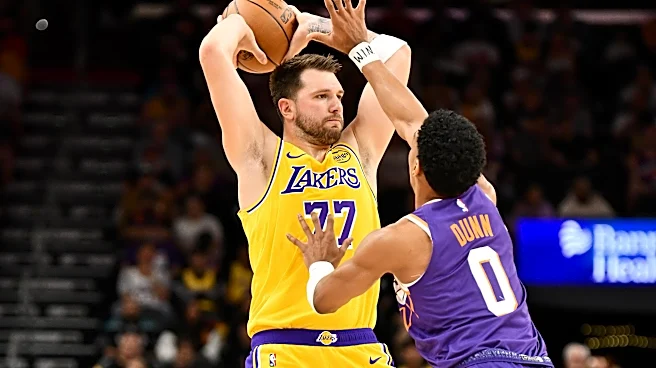
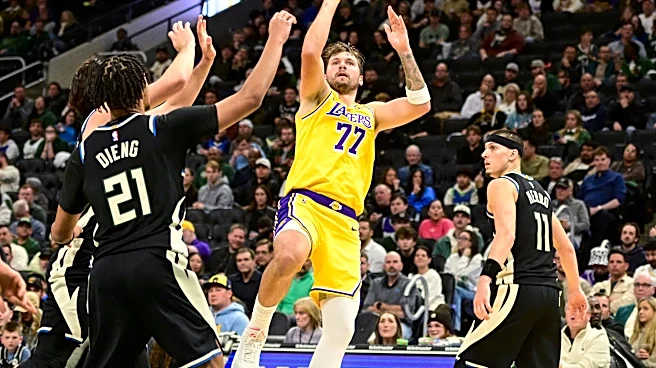
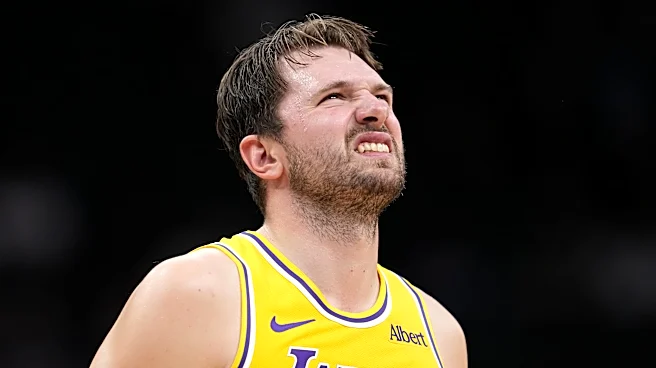
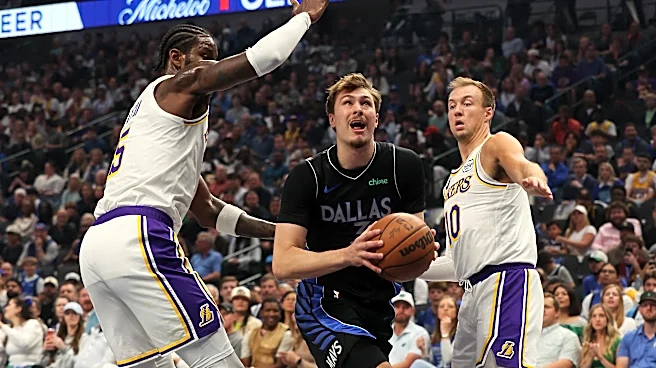
Sports analyst Skip Bayless has asserted that Luka Doncic's discomfort with sharing the spotlight with LeBron James contributed to the Los Angeles Lakers' strong 11-2 start in the 2026-27 NBA season. Bayless, a long-standing critic of James, suggested
that Doncic 'couldn't stand' sharing the stage with James, implying that James' departure allowed Doncic to fully thrive. According to Bayless, Doncic felt he was better than James at that point in their careers and did not love sharing the stage due to James' extraordinary star power. During the 2025-26 season, James reportedly took a backseat to accommodate Doncic's ball-dominant style, averaging a career-low 15.3 field-goal attempts and 20.9 points per game, while Doncic led the league with 33.5 points per game.
Why It's Important?
This commentary from Skip Bayless highlights the complex dynamics that can arise when two generational talents share a team, particularly regarding leadership and offensive roles. It suggests that even when one star (James) willingly adjusts his game to accommodate another (Doncic), underlying tensions or desires for individual prominence can still impact team chemistry and performance. The Lakers' current success without James, as framed by Bayless, could be interpreted as evidence that a clear hierarchy and singular star focus might be more beneficial for certain teams. This narrative also fuels ongoing debates about player ego, team construction, and the optimal way to integrate multiple superstars in the NBA, especially as younger talents emerge to challenge established veterans.
What's Next?
The Lakers' continued performance throughout the 2026-27 season will be crucial in validating or refuting Bayless's claims. If Luka Doncic maintains his league-leading scoring and the Lakers sustain their winning record, it will lend credence to the idea that Doncic is thriving in a primary role without James. Conversely, any significant downturn in the team's success could lead to re-evaluations of the team's previous dynamic. This narrative will likely continue to be a talking point in sports media, with analysts dissecting Doncic's individual achievements and the Lakers' collective performance in the post-LeBron era. The focus will remain on Doncic's pursuit of an MVP award and his efforts to establish his own legacy as the face of the Lakers.
Beyond the Headlines
Beyond the immediate sports analysis, Bayless's comments touch upon broader themes of generational shifts in professional sports and the psychological aspects of elite competition. The idea that a younger star might feel overshadowed by an established legend, even when the legend is accommodating, speaks to the intense drive for individual recognition and legacy-building among top athletes. It also raises questions about the sustainability of 'super teams' built around multiple dominant personalities. This situation could serve as a case study for future team managements on how to best manage the transition of power between aging superstars and rising talents, emphasizing the importance of not just on-court fit but also personality dynamics and individual aspirations.