




What's Happening?
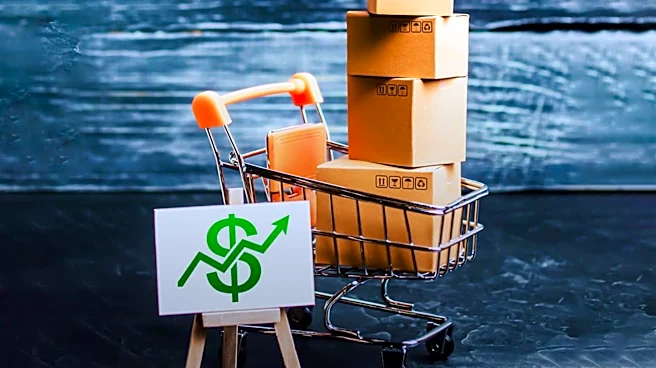
Visa's Business and Economic Insights (VBEI) team forecasts a 4.5% year-over-year increase in U.S. holiday retail sales for November and December 2026. This projection marks the strongest growth since 2021. Other major economic forecasters and industry
groups, including Deloitte and the National Retail Federation (NRF), echo similar sentiments, predicting overall retail growth between 4% and 4.8%. Deloitte anticipates total holiday sales to reach between $1.7 trillion and $1.71 trillion, while the NRF projects November and December retail sales to exceed $1 trillion, climbing 4.2% year-over-year. This growth is largely attributed to higher-income households and younger demographics, who are prioritizing value and experiences. E-commerce is expected to see significant expansion, with Adobe forecasting a 6.7% surge to a record $275.1 billion, and Deloitte estimating an even wider online growth between 7.5% and 8.4%. Consumers are demonstrating a willingness to spend but are making deliberate choices, with a continued focus on value. Inflation is expected to contribute to the nominal growth, with consumer prices for holiday-related goods projected to increase by 3.4% year-over-year.
Why It's Important?
This forecast is important for U.S. retailers and the broader economy as it signals a robust, albeit nuanced, holiday shopping season. The projected growth indicates continued consumer resilience and spending capacity, which is crucial for economic stability. However, the emphasis on 'value' and 'deliberate choices' by consumers suggests that retailers will need to adapt their strategies to attract both high-income spenders and budget-conscious shoppers. The significant growth in e-commerce highlights the ongoing shift in consumer behavior towards digital platforms, necessitating optimized online storefronts and promotional strategies for businesses. The impact of inflation, contributing to nominal sales growth, means that real spending (a proxy for foot traffic) is expected to rise by a more modest 1.1%. This bifurcation in spending patterns—higher-income households increasing both travel and spending, while lower-income groups plan to switch to lower-cost brands—underscores widening economic disparities and their influence on retail. Retailers who can effectively balance compelling value propositions with strategic inventory positioning will be best positioned to capitalize on this holiday season.
What's Next?
Retailers and brands are advised to focus on balancing compelling value propositions with strategic inventory positioning to cater to diverse consumer segments. This includes offering tiered pricing options and lower-cost brand alternatives to retain price-sensitive consumers, particularly those earning under $100,000. Given the robust growth projected for e-commerce, businesses must optimize their digital storefronts and promotional strategies to capture strong online demand. The report also suggests that high travel costs might divert some spending from travel to physical merchandise, potentially benefiting retailers. Merchants should lean into merchandise promotions and ensure their online presence is strong. The holiday season will likely be defined by a combination of healthy spending and a continued focus on value, requiring adaptable and consumer-centric retail strategies.
Beyond the Headlines
The insights from Visa's report reveal deeper implications regarding consumer behavior and economic trends. The continued focus on value, even among resilient spenders, suggests a lasting shift in consumer mindset post-inflationary periods, where price consciousness remains paramount. The divergence in spending habits between higher and lower-income households could exacerbate existing economic inequalities, with retailers potentially tailoring offerings more distinctly to these different segments. The strong growth in e-commerce also points to the accelerating digital transformation of retail, potentially leading to further consolidation or innovation in online shopping experiences. Furthermore, the report subtly hints at the psychological impact of inflation, where consumers are willing to spend but are more discerning, indicating a maturation of the market where 'smart spending' is prioritized. This could lead to a long-term trend of consumers seeking greater transparency and justification for product pricing.