






What's Happening?
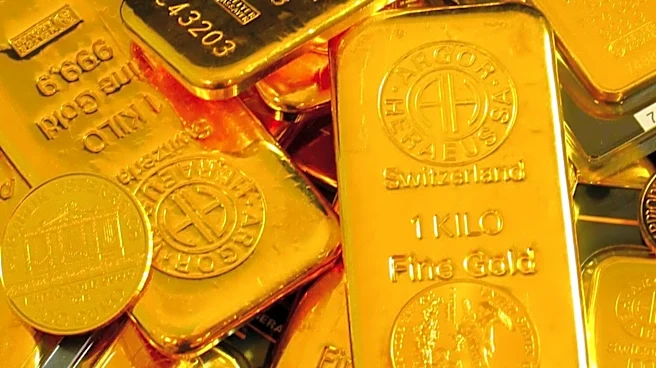
Gold prices have experienced a significant decline, dropping nearly 3% due to renewed tensions between the U.S. and Iran. The geopolitical conflict has heightened inflationary pressures, leading to a surge in energy prices and concerns over global inflation.
This situation has increased the likelihood of central banks raising interest rates, which negatively impacts non-yielding assets like gold. The CME Group's FedWatch Tool indicates a more than 70% chance of a rate hike in September, further contributing to the downward pressure on gold prices.
Why It's Important?
The drop in gold prices highlights the sensitivity of financial markets to geopolitical tensions and their impact on inflation and interest rates. As a traditional safe-haven asset, gold's decline suggests a shift in investor sentiment, potentially affecting portfolios and investment strategies. The situation underscores the interconnectedness of global events and financial markets, with implications for economic stability and monetary policy decisions. Investors and policymakers will need to navigate these challenges to mitigate risks and maintain economic resilience.
What's Next?
If tensions between the U.S. and Iran persist, further volatility in gold prices and other financial markets can be expected. Central banks may adjust their monetary policies in response to inflationary pressures, influencing interest rates and investment strategies. Market participants will likely monitor geopolitical developments closely, adjusting their positions to manage risk. The situation may also prompt discussions on diversifying investment portfolios to hedge against geopolitical risks.