





What's Happening?
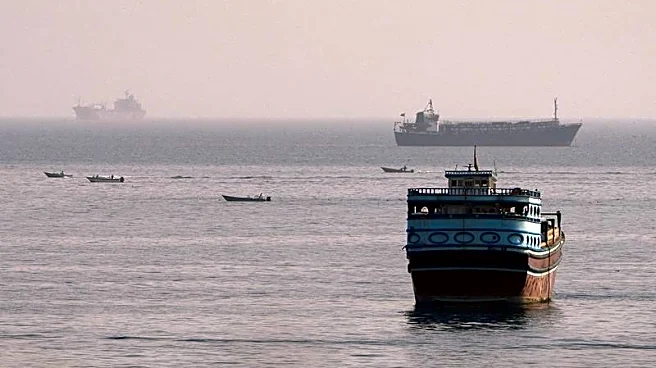
Oil prices have decreased as diplomatic efforts to reach a temporary agreement in the Strait of Hormuz gain traction, despite recent vessel attacks. Treasury Secretary Scott Bessent indicated that a deal with Iran could be reached soon, potentially ensuring
freedom of navigation through the critical waterway. The market reacted to these developments, with crude prices falling after initial gains spurred by another vessel attack. The situation remains volatile, with ongoing negotiations involving multiple Gulf states and indirect talks between the U.S. and Iran.
Why It's Important?
The Strait of Hormuz is a vital chokepoint for global oil shipments, and any disruptions can significantly impact oil prices and global energy markets. The potential agreement could stabilize oil prices by reducing the risk premium associated with shipping through the strait. However, the situation remains fragile, and any breakdown in talks or further attacks could quickly reverse the current trend. The outcome of these negotiations will have broad implications for global energy security and economic stability.
What's Next?
The immediate focus will be on the progress of diplomatic talks and the potential for a temporary shipping corridor in the Strait of Hormuz. Stakeholders in the energy market will be closely monitoring vessel movements and any official announcements regarding the agreement. A successful deal could lead to a more stable oil market, while continued tensions or further attacks could escalate the situation, impacting global oil supply and prices.