



What's Happening?
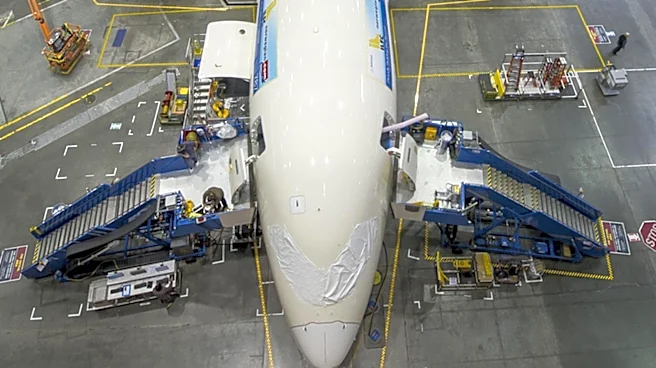
The documentary 'Freefall: A Reckoning for Boeing' delves into the manufacturing practices of Boeing, particularly focusing on the company's North Charleston, South Carolina facility. The film suggests that Boeing prioritized cost-cutting and speed in producing
the 787 'Dreamliner' plane, leading to shoddy engineering, including ill-fitting pipes, holes in fuselage sections, and tiny metal slivers that could cause electrical problems. The documentary also highlights the case of John Barnett, a former quality control manager at Boeing who became a whistleblower. Barnett had made detailed reports on the company’s manufacturing negligence over his 32-year career. In March 2024, while giving a deposition against Boeing in South Carolina, Barnett was found dead in his truck from a gunshot wound, which the Charleston County coroner described as self-inflicted. His interviews are a central component of 'Freefall,' forming what the filmmaker calls a 'defining thread' of the movie.
Why It's Important?
This documentary is important because it brings to light serious allegations of manufacturing negligence within a major U.S. aerospace company, Boeing, which has significant implications for public safety and corporate accountability. The claims of shoddy engineering and cost-cutting measures at the North Charleston facility raise concerns about the integrity of aircraft production and the potential risks to passengers. The tragic death of whistleblower John Barnett, particularly while he was providing testimony against the company, casts a shadow over corporate ethics and the protections afforded to individuals who expose corporate wrongdoing. This situation can erode public trust in large corporations and regulatory oversight, potentially leading to increased scrutiny from government bodies and consumer advocacy groups. It also underscores the immense pressure whistleblowers can face and the potential consequences of speaking out against powerful entities.
What's Next?
The release of 'Freefall: A Reckoning for Boeing' could intensify public and regulatory scrutiny of Boeing's manufacturing processes and safety standards. It may prompt renewed calls for investigations into the company's practices, particularly concerning the North Charleston facility and the allegations of negligence. The documentary could also reignite discussions about whistleblower protections and the need for stronger mechanisms to safeguard individuals who come forward with critical information about corporate misconduct. Depending on the public and political reaction, there could be pressure on government agencies, such as the Federal Aviation Administration (FAA), to conduct more thorough audits and enforce stricter compliance measures within the aerospace industry. Furthermore, the film might influence ongoing legal proceedings or inspire new ones related to Boeing's manufacturing quality and safety protocols.
Beyond the Headlines
The narrative presented in 'Freefall' extends beyond immediate safety concerns, touching upon deeper ethical and cultural issues within corporate America. The alleged prioritization of profit over quality and safety, as depicted in the documentary, raises fundamental questions about corporate governance and the responsibilities of large enterprises to their employees and the public. The case of John Barnett highlights the profound personal risks associated with whistleblowing and the systemic challenges individuals face when confronting powerful organizations. This situation could contribute to a broader societal debate about the balance between economic efficiency and ethical conduct, and the role of media and documentaries in holding corporations accountable. It also underscores the long-term impact of corporate decisions on reputation, trust, and the overall integrity of critical industries.