




What's Happening?
The culinary traditions of India and Korea highlight distinct approaches to dining, particularly in their choice of side dishes following spicy meals. In India, curd is a staple, deeply rooted in the country's warm climate and dairy culture. It serves
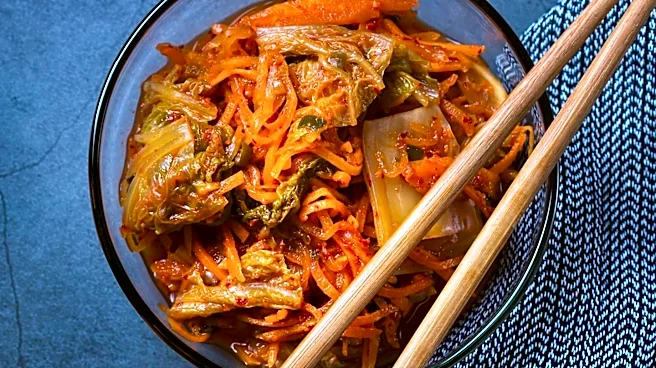
not only as a cooling agent but also as an auspicious food in various rituals and celebrations. Conversely, Korea's long winters and need for food preservation have led to a rich tradition of fermented vegetables, such as kimchi, which are integral to Korean meals. These practices reflect historical and environmental influences on dietary habits.
Why It's Important?
Understanding these cultural dining practices offers insights into how geography and climate shape food traditions. In India, the use of curd is not only a culinary choice but also a cultural one, reflecting the country's agricultural practices and religious beliefs. In Korea, the emphasis on fermentation highlights the importance of food preservation in a region with harsh winters. These differences underscore the diversity of global food cultures and the ways in which they adapt to local conditions, influencing dietary preferences and health outcomes.