
What's Happening?
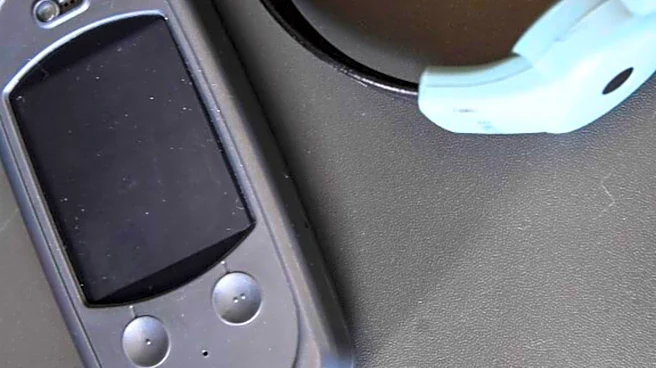
Science Corporation has received approval from Europe's medical device regulator to market its vision-restoring device, PRIMA, for age-related macular degeneration. The device involves an outpatient procedure
to implant a small chip in the eye, which works with camera-equipped glasses to restore functional vision. The company, founded by Max Hodak, aims to provide a sustainable business model by focusing on restoring vision to the blind. PRIMA has also received a designation from the US FDA for expedited review, potentially treating two rare kinds of blindness. Science Corp. plans to offer PRIMA in Germany, with the first procedure expected in September.
Why It's Important?
The approval of Science Corporation's PRIMA device marks a significant advancement in the treatment of vision loss due to age-related macular degeneration. By providing a functional vision solution, the device offers hope to millions affected by this condition. The development also highlights the potential of brain-computer interfaces in medical applications, showcasing how technology can address complex health challenges. As the device enters the market, it could set a precedent for similar innovations, encouraging further research and development in the field of vision restoration and other neurological applications.
What's Next?
Science Corporation is preparing to launch PRIMA in Germany and is in discussions with healthcare providers regarding reimbursement. The company plans to continue improving the device's capabilities and form factor, aiming for a more compact and efficient solution. Additionally, Science Corp. is collaborating with Yale Medical School to develop procedures for human trials of a bio-hybrid brain sensor. As these developments progress, the company may expand its offerings and explore new applications for its technology, potentially leading to breakthroughs in other areas of medical treatment.