







What's Happening?
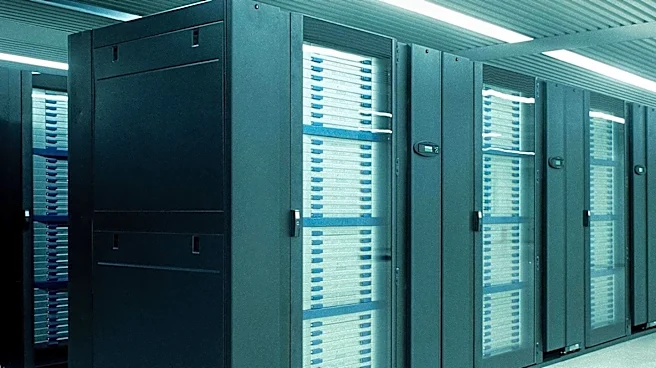
Goldman Sachs has identified a significant opportunity for utility companies in Europe due to the rapid expansion of data centers across the continent. In a recent note, Goldman Sachs analysts predict an 'earnings super cycle' for the utilities sector,
driven by the increasing demand for electricity. The report suggests that electricity bill increases in Europe will be lower than expected, averaging between 2% and 4% annually over the next decade. This is notably less than the 5% annual increase experienced over the past ten years. The analysts recommend several stocks that could benefit from this trend, particularly those involved in wind energy. Danish wind company Ørsted is highlighted as a key beneficiary, as Europe shifts its energy policy towards offshore wind power. Other recommended companies include Portuguese renewables firm EDPR and German onshore wind provider Nordex, both of which are expected to see improved margins and increased orders.
Why It's Important?
The expansion of data centers in Europe represents a significant shift in energy consumption patterns, with potential implications for the global energy market. As data centers require substantial electricity, utility companies that can meet this demand stand to benefit significantly. The focus on renewable energy sources, such as wind power, aligns with broader environmental goals and could lead to increased investment in sustainable energy infrastructure. For U.S. stakeholders, the involvement of companies like EDPR, which has a significant portion of its business in the U.S., highlights the interconnected nature of the global energy market. The potential for lower-than-expected electricity bill increases could also alleviate some economic pressures on European consumers, potentially stabilizing the market and encouraging further investment in renewable energy.
What's Next?
As the demand for electricity continues to grow, utility companies are likely to increase their investments in renewable energy infrastructure. This could lead to further advancements in wind energy technology and increased capacity for offshore and onshore wind farms. Additionally, the potential softening of U.S. policies on wind farms may encourage more international projects, benefiting companies like Ørsted and Nordex. Investors will be closely monitoring the performance of these companies and the broader utilities sector to assess the long-term viability of these investments. The ongoing geopolitical landscape, including conflicts like the U.S.-Iran situation, may also influence energy policies and market dynamics.