




What's Happening?
Tabata Hamono, a small blacksmith shop located on Tanegashima Island in Japan, has made its knives available in the United States for the first time through Chef Knives To Go (CKTG), its exclusive U.S. dealer. Tabata Hamono operates from an island historically
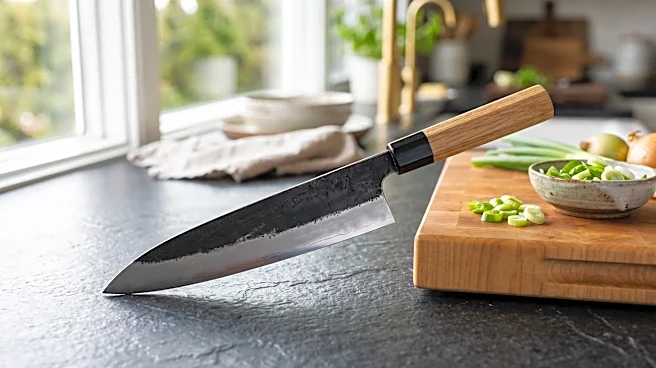
significant as the point where firearms were introduced to Japan in 1543. The knives offered, such as the Tabata Kurouchi Blue #2 Tall Gyuto 210mm, are characterized by their small-batch, handmade nature. These gyuto knives feature a 63mm blade height, providing ample knuckle clearance and a larger surface for food handling. The core of the blade is made from Blue #2 carbon steel, hardened to HRC 62, and is wrapped in stainless cladding for easier maintenance. The finish is kurouchi, an as-forged surface with a polished bevel at the edge. The handle is an oak octagonal design with a black painted ferrule, prioritizing a simple and comfortable grip. Users are advised on care instructions, noting that Blue #2 is a reactive carbon steel that requires prompt washing and drying, and should avoid prolonged contact with acidic foods, frozen items, bones, or hard materials.
Why It's Important?
The introduction of Tabata Hamono knives to the U.S. market signifies a notable expansion of artisanal Japanese cutlery availability for American consumers and professional chefs. This move provides access to specialized, handmade tools that are distinct from mass-produced alternatives, catering to a niche market that values craftsmanship and unique material properties. For CKTG, becoming the sole U.S. dealer establishes a competitive advantage by offering an exclusive product line. The use of Blue #2 carbon steel, known for its sharpness and edge retention, combined with stainless cladding, offers a balance of performance and practicality that could appeal to a broad range of users. This availability also highlights the growing appreciation in the U.S. for traditional Japanese craftsmanship and the functional artistry of kitchen tools, potentially influencing culinary trends and consumer preferences towards higher-quality, specialized equipment. The historical context of Tanegashima Island, where the blacksmith shop is located, adds a cultural narrative to the product, enhancing its appeal.
What's Next?
Following the initial launch, CKTG will likely focus on marketing and distribution efforts to introduce Tabata Hamono knives to a wider U.S. audience. This could involve showcasing the unique features of the knives, such as the Blue #2 carbon steel and kurouchi finish, and emphasizing their handmade quality. Customer feedback and sales performance will be crucial in determining the future expansion of the Tabata Hamono product line in the U.S. market. There may be opportunities for CKTG to introduce other knife types or sizes from Tabata Hamono based on consumer demand. Additionally, educational content regarding the proper care and maintenance of reactive carbon steel knives will be important to ensure customer satisfaction and product longevity. The success of this exclusive dealership could also pave the way for other small, artisanal Japanese manufacturers to enter the U.S. market, further diversifying the options available to American consumers.
Beyond the Headlines
The entry of Tabata Hamono into the U.S. market through an exclusive dealership reflects a broader trend of globalization in specialized craftsmanship. It underscores the increasing demand among American consumers for authentic, high-quality, and often historically rich products from around the world. This trend extends beyond culinary tools to various artisanal goods, indicating a shift in consumer values towards durability, heritage, and unique production methods over mass-produced items. The challenges associated with maintaining reactive carbon steel knives, such as the Blue #2, also highlight a growing willingness among consumers to engage in more involved product care for superior performance and longevity. This could foster a deeper appreciation for the materials and processes involved in traditional craftsmanship. Furthermore, the partnership between a small Japanese blacksmith and a U.S. dealer exemplifies how niche markets can thrive through direct and exclusive distribution channels, bypassing larger retail chains and maintaining the integrity and story behind the product.