







What's Happening?
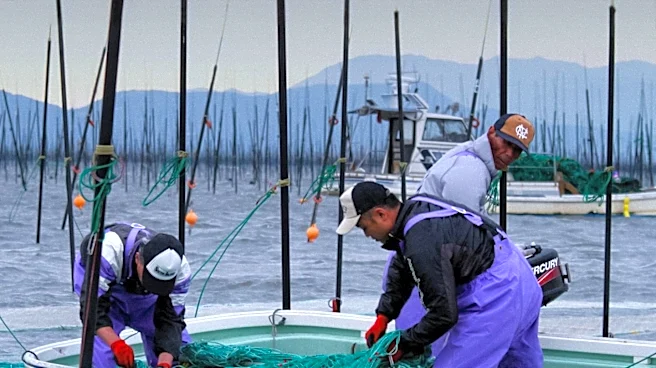
Japanese Akoya pearl harvests have experienced a sharp decline, with recent yields being the smallest on record. This reduction is attributed to a combination of pollution, disease, and an aging workforce within the industry. A major die-off of Akoya oysters
in 1996 initially led to the expansion of Akoya pearl farming into China and Vietnam. More recently, summer die-offs of young oysters have further impacted farms, exacerbating the scarcity of Japanese Akoya pearls. Historically, Japan's Akoya harvest peaked in the mid-1960s at approximately 150 tonnes annually. The current rarity of Japanese Akoya pearls, now scarcer than they have been in a century, contributes to the high prices commanded by fine, certified Japanese strands. Akoya pearls are bead-cultured, a method developed in Japan over a century ago, and are typically harvested in winter for optimal luster.
Why It's Important?
The significant decline in Japanese Akoya pearl harvests has substantial implications for the global pearl market and the jewelry industry. As Japanese Akoya pearls become increasingly rare, their value and price are expected to continue rising, impacting consumers and retailers of high-end jewelry. This scarcity also highlights the vulnerability of aquaculture to environmental changes and disease, prompting concerns about sustainable farming practices. The shift in production to China and Vietnam following earlier die-offs indicates a broader geographical diversification of the Akoya pearl supply chain, but recent challenges suggest that these alternative sources may also face similar pressures. For U.S. consumers and businesses, this means higher costs for authentic Japanese Akoya pearls and a potential increase in demand for alternative pearl types or origins.
What's Next?
The ongoing challenges facing Japanese Akoya pearl farming necessitate a focus on developing more resilient and sustainable cultivation methods. Research into disease-resistant oyster strains and improved environmental management practices will be crucial for the long-term viability of the industry. The increased rarity of Japanese Akoya pearls may also drive innovation in the cultured pearl market, potentially leading to new types of pearls or enhanced marketing of existing alternatives. Consumers and jewelers should anticipate continued price volatility and a greater emphasis on certification and provenance to ensure the authenticity and quality of Japanese Akoya pearls. The industry may also see further consolidation or shifts in production centers as environmental pressures persist.
Beyond the Headlines
The plight of the Japanese Akoya pearl industry underscores broader environmental concerns, particularly the impact of pollution and climate change on marine ecosystems. The sensitivity of Akoya oysters to water quality and temperature fluctuations serves as a microcosm of the challenges faced by many aquatic species and industries reliant on healthy marine environments. This situation could prompt a reevaluation of global supply chains for luxury goods, encouraging greater transparency and ethical sourcing. Furthermore, the cultural significance of Akoya pearls in Japan, where the cultured pearl industry originated, adds a layer of heritage preservation to the economic considerations. The decline in harvests is not just an economic issue but also a loss of a traditional craft and a natural resource that has defined a significant part of Japan's identity in the global luxury market.