
What's Happening?
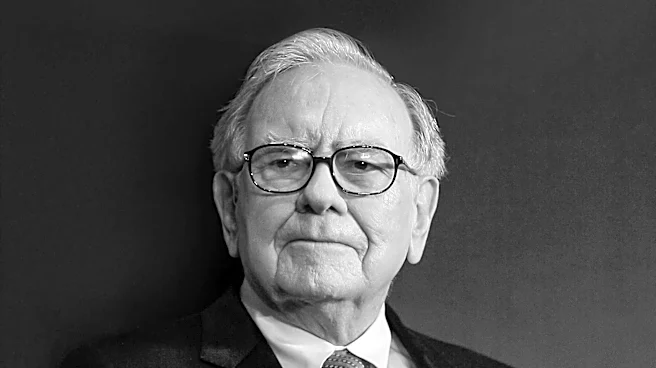
Greg Abel, CEO of Berkshire Hathaway, has continued the company's strategy of significant share buybacks, investing $9.6 billion in Berkshire Hathaway stock during the third quarter. This move follows the precedent set by his predecessor, Warren Buffett,
who stepped down at the beginning of the year. Buffett's tenure saw approximately $92 billion spent on buybacks since 2018, a figure that surpasses the investment in any single stock, including Apple, which is Berkshire Hathaway's largest holding. Abel's actions align with his earlier assurances to investors that the company's core values and culture would remain consistent under his leadership. The buybacks are interpreted as a signal of management's confidence in the company's future outlook and a belief that its shares are undervalued relative to its growth potential. This strategy aims to increase intrinsic value per share by reducing the total number of outstanding shares.
Why It's Important?
This continued emphasis on share buybacks by Berkshire Hathaway under Greg Abel signals a consistent approach to capital allocation that prioritizes returning value to shareholders and reflects confidence in the company's intrinsic value. For investors, this strategy can lead to increased earnings per share and a higher stock price over time, assuming the shares are indeed undervalued. It also reinforces the idea that Berkshire Hathaway remains a stable investment, particularly in uncertain market conditions, due to its diversified business model and management's perceived ability to accurately assess its own valuation. The decision to invest heavily in its own stock, rather than other market opportunities, suggests that leadership believes Berkshire Hathaway itself offers the best return on investment currently available, which could influence broader market perceptions of corporate value and capital deployment strategies.
What's Next?
Berkshire Hathaway is expected to continue its share buyback program as long as management believes the stock remains undervalued. This strategy will likely be a key component of Abel's leadership, mirroring Buffett's long-standing approach. Investors will closely monitor future quarterly reports for further buyback activity, which could influence market sentiment and the company's stock performance. The ongoing geopolitical and economic uncertainties, along with concerns about valuations in sectors like AI, may further solidify Berkshire Hathaway's position as a defensive investment. The company's diversified portfolio is anticipated to provide resilience against potential market downturns, and its capital allocation decisions, including buybacks, will be crucial in navigating these conditions and maintaining shareholder value.
Beyond the Headlines
The continuation of Berkshire Hathaway's share buyback strategy under Greg Abel highlights a broader philosophical approach to corporate governance and value creation. It underscores a belief that management's deep understanding of the company's intrinsic worth allows for more effective capital deployment internally than through external investments, even in a market with numerous opportunities. This approach implicitly critiques the short-term focus often seen in other corporations, instead emphasizing long-term value accretion. Ethically, it raises questions about the balance between returning capital to shareholders and investing in growth or innovation. Legally, buybacks are a well-established practice, but their scale at Berkshire Hathaway sets a precedent for how large, stable conglomerates manage their capital, potentially influencing other companies to adopt similar strategies when they perceive their own stock as undervalued. This could lead to a broader shift in corporate finance towards more self-investment, impacting market liquidity and investment trends.