



What's Happening?
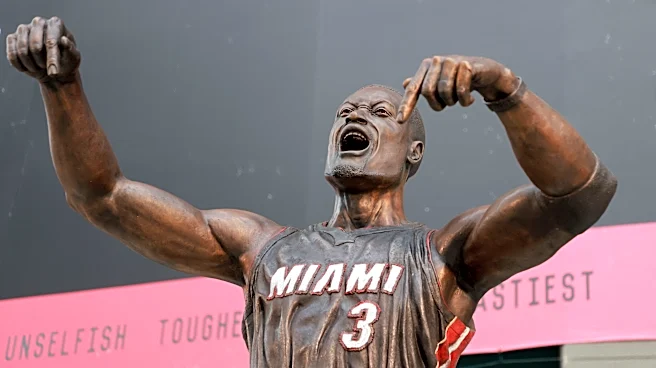
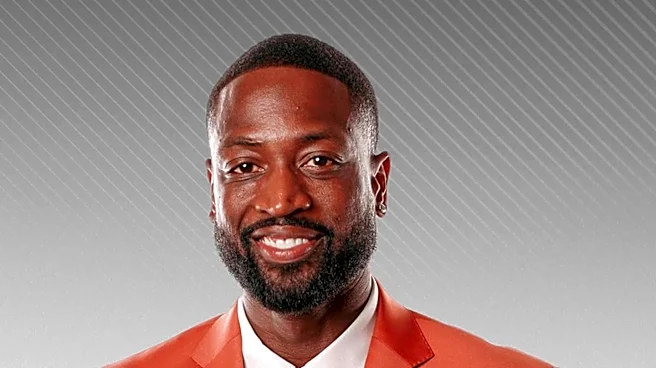
The statue of Dwyane Wade located outside the Kaseya Center in Miami has received a significant makeover. The original sculpture, unveiled two years prior, drew public criticism for not accurately resembling the retired Miami Heat legend. Many observers
noted that the statue's face looked more like other public figures such as Laurence Fishburne, Kelsey Grammer, or Ken Norton Jr., rather than Wade himself. In response to this widespread feedback, the original sculptors, Omri Amrany and Oscar Léon, redesigned the head of the statue. The updated version, which was unveiled on Friday, aims to provide a more accurate likeness of the three-time NBA champion. Wade himself acknowledged the public's reaction, stating that he understood the need to make adjustments to ensure the statue resonated with the community.
Why It's Important?
This event highlights the significant role of public perception and fan engagement in sports culture, particularly concerning tributes to iconic athletes. Statues are meant to be lasting symbols of achievement and connection with a fanbase, and an inaccurate representation can undermine their intended purpose. For the Miami Heat organization, ensuring the statue accurately reflects Dwyane Wade is crucial for maintaining the integrity of their tribute and honoring a beloved figure. The decision to revise the statue demonstrates a responsiveness to public sentiment, which can strengthen the bond between the team, its legends, and its supporters. It also underscores the artistic challenges involved in capturing a likeness, especially when the subject is a widely recognized public figure.
What's Next?
With the redesigned head now in place, the Dwyane Wade statue is expected to stand as a more accurate and well-received tribute outside the Kaseya Center. The positive reception from fans following the unveiling of the updated statue suggests that the adjustments have successfully addressed the initial criticisms. This resolution is likely to solidify the statue's place as a cherished landmark for Miami Heat fans. The incident may also serve as a precedent for future public art projects, emphasizing the importance of early and thorough public feedback in the design process to avoid similar controversies. For the sculptors, this experience could influence their approach to future commissions involving public figures.
Beyond the Headlines
The controversy and subsequent revision of the Dwyane Wade statue delve into deeper discussions about artistic interpretation versus public expectation, and the collective ownership of public symbols. While artists often have creative license, monuments dedicated to public figures often carry a communal significance that demands a certain level of fidelity to the subject's recognizable features. Wade's own statement, acknowledging that the statue 'doesn’t belong only to me. It also belongs to Miami,' encapsulates this idea of shared ownership. This situation also subtly touches on the evolving nature of celebrity and public image in the digital age, where memes and social media reactions can quickly shape narratives and influence decisions, even concerning permanent installations like statues.