




What's Happening?
James Dolan, owner of the New York Knicks, addressed the team with a motivational speech emphasizing the need for both players and their families to make sacrifices for the team's success. This speech, delivered on April 3 and later shared on 'The Roommates
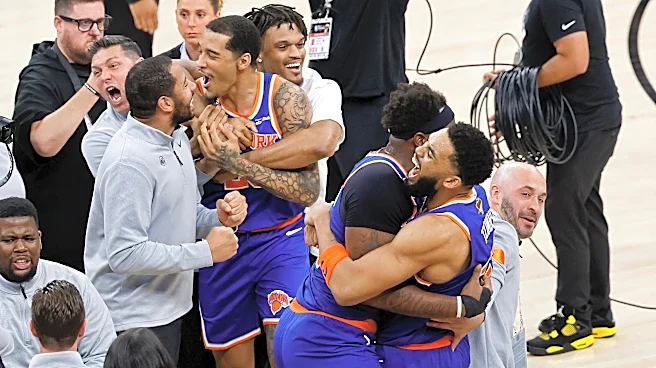
Show' podcast, marked Dolan's first direct communication with the team during his tenure. Dolan stressed the importance of eliminating distractions and fully committing to the championship goal, urging players to discuss the necessary sacrifices with their families. He promised that the contributions of players' families would be recognized, offering championship rings to their significant others if the team won. The Knicks ended their 53-year championship drought by defeating the San Antonio Spurs in Game 5 of the NBA Finals. A ticker-tape parade is planned in Lower Manhattan to celebrate the victory.
Why It's Important?
The Knicks' championship victory is a significant milestone, ending a long-standing drought and boosting morale among fans and the team. Dolan's approach highlights the often-overlooked role of players' families in supporting professional athletes. By acknowledging their sacrifices, Dolan fosters a sense of community and shared purpose, which can enhance team cohesion and performance. The victory also has financial implications, potentially increasing the franchise's value and Dolan's net worth, which has already grown significantly this year. This success could influence other sports teams to adopt similar strategies, emphasizing holistic support systems for athletes.
What's Next?
Following the championship win, the Knicks will celebrate with a ticker-tape parade in New York City, a tradition that underscores the team's achievement and its impact on the city. The event is expected to draw large crowds, with high demand for prime viewing spots. This victory could lead to increased merchandise sales, sponsorship deals, and media attention, further boosting the team's financial standing. The Knicks' success may also inspire other teams to reevaluate their support structures and motivational strategies, potentially leading to broader changes in how professional sports teams engage with players and their families.