




What's Happening?
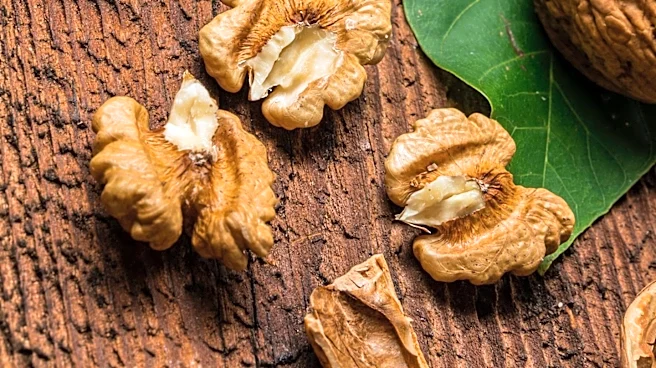
The U.S. Department of Agriculture (USDA) has finalized contracts to purchase 12 million pounds of California walnut kernels, equivalent to approximately 28 million pounds in-shell, valued at nearly $30 million. This acquisition, made through the USDA's
Section 32 authority, follows an initial intent-to-purchase announcement made in August. The Section 32 program enables the USDA to buy surplus commodities and distribute them to domestic food programs, including food banks nationwide. This latest purchase brings the USDA's total Section 32 walnut acquisitions for 2026 to $45 million, translating to nearly 17 million pounds of kernels destined for food banks. The California Walnut Commission confirmed the contracts were signed on September 25, with a release issued on September 28.
Why It's Important?
This significant purchase by the USDA is crucial for the California walnut industry, which produces over 99% of U.S. walnuts. Growers have been facing challenges due to a near-record 2025 crop, which resulted in high carry-in inventory and depressed prices, often below $1 per pound, while their operational costs continued to rise. The USDA's intervention helps to reduce the surplus inventory from the 2025 crop, creating a more balanced market as the 2026 harvest begins. Robert Verloop, CEO of the California Walnut Commission, emphasized that lowering the carry-in inventory is a critical step for the financial stability of family farms and rural communities. This action provides a positive boost, offering handlers more capacity to manage the new crop and establishing a firmer price floor for the market.
What's Next?
The immediate impact of this purchase is expected to be felt as the new selling season for walnuts commences. With a substantial volume of old-crop product removed from storage, handlers will have increased flexibility to market the 2026 crop. This could lead to improved prices for growers, who have endured several years of low returns. The California Walnut Commission, representing over 3,700 growers and approximately 70 handlers, will continue to monitor market conditions and engage with the USDA. Future actions from the USDA, potentially including additional commodity purchases, could further stabilize the market, especially if global trade pressures persist or if subsequent harvests yield large surpluses. The industry will be looking for sustained support to ensure long-term viability.
Beyond the Headlines
The USDA's Section 32 program highlights a broader strategy of utilizing agricultural surpluses to address food insecurity within the U.S. While primarily aimed at supporting farmers, these purchases also play a vital role in bolstering the supply chains of domestic food programs, such as food banks. This dual benefit underscores the interconnectedness of agricultural policy and social welfare. The ongoing challenges faced by walnut growers, including rising costs and global market fluctuations, reflect the broader economic pressures on American agriculture. The reliance on government intervention to manage surpluses also raises questions about the long-term sustainability of current production levels and the need for diversified market strategies to reduce dependence on such programs. This situation also brings to light the complex balance between supporting agricultural producers and ensuring affordable food access for consumers.