



What's Happening?
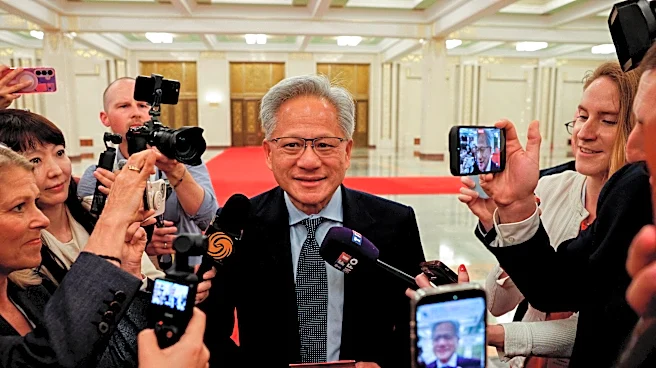
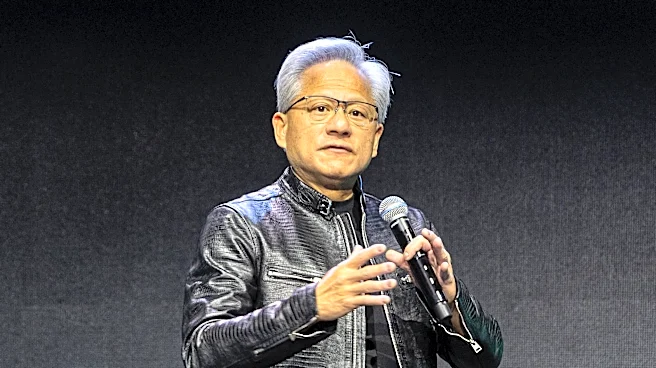
Jensen Huang has returned to his position as CEO of Nvidia after resigning due to allegations of extramarital affairs, including one with an individual suspected of working for Chinese intelligence, which raised national security concerns. His reinstatement
followed an intervention by President Trump, who stated, 'I made the deal.' This development has sparked frustration among many women, who view it as an example of sexism, double standards, and a lack of accountability for powerful men in the tech industry and politics. President Trump had previously posted an AI-generated image of Huang, which many interpreted as insulting and reflective of these broader issues. While some, including venture capitalist Jason Calacanis and billionaire Elon Musk, defended Huang and called him a 'hero,' others, like Cleo Capital managing director Sarah Kunst, criticized the 'hero worship' and the tech industry's 'founder mode' mythology.
Why It's Important?
The reinstatement of Jensen Huang at Nvidia, a leading company in AI chip technology, carries significant implications for the U.S. tech industry and broader societal discussions. The controversy highlights ongoing concerns about corporate governance, national security, and gender equality within powerful sectors. The allegations against Huang, particularly those involving potential foreign intelligence, underscore the vulnerabilities of critical U.S. technology companies to espionage and the importance of executive integrity. Furthermore, the swift reversal of Nvidia's board decision following President Trump's involvement raises questions about political influence in corporate affairs. For women in tech, this event reinforces frustrations about the 'glass cliff' phenomenon, where women are often appointed to leadership roles during crises and then replaced once stability returns, as seen with interim CEO Colette Kress. This situation could deter women from pursuing leadership positions in an industry already struggling with diversity.
What's Next?
The immediate future will likely see continued scrutiny of Nvidia's corporate governance and the implications of President Trump's intervention. The tech industry may face renewed calls for greater transparency and accountability regarding executive conduct and national security risks. Discussions around gender equality and the 'glass cliff' phenomenon are also expected to intensify, potentially leading to increased advocacy for more equitable leadership opportunities and support for women in executive roles. Nvidia's performance and strategic direction under Huang's renewed leadership will be closely watched, especially given the company's critical role in the global AI race. The incident could also prompt further debate on the ethical use of AI-generated imagery in political discourse and its impact on public perception.
Beyond the Headlines
This event delves into deeper societal and ethical implications beyond the immediate corporate and political spheres. The 'hero worship' culture prevalent in the tech industry, where founders are often seen as indispensable, is being challenged, prompting a re-evaluation of leadership models and accountability. The use of AI-generated images by political figures, as demonstrated by President Trump, raises concerns about the spread of misinformation and the manipulation of public opinion, particularly when such images contribute to harmful stereotypes or undermine serious discussions. The national security aspect of the allegations against Huang also highlights the complex interplay between personal conduct, corporate responsibility, and geopolitical competition, particularly in critical technological domains like AI. This incident could serve as a catalyst for broader conversations about the ethical responsibilities of powerful individuals and institutions in shaping both technological advancement and societal norms.