



What's Happening?
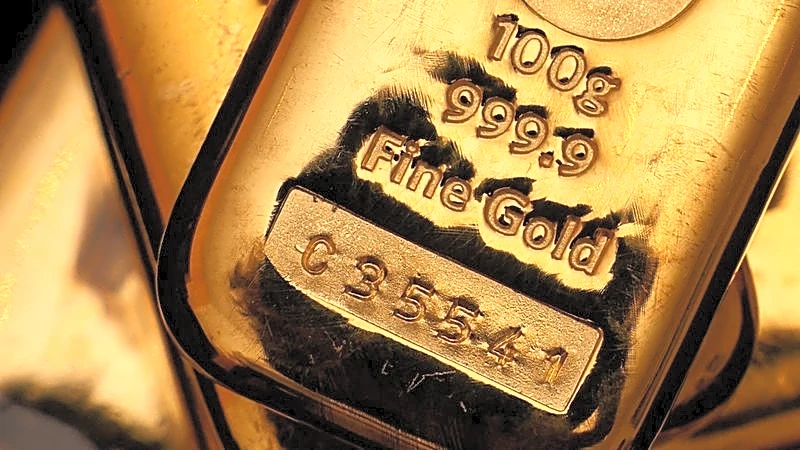
CIBC has revised its gold and silver price forecasts, significantly lowering near-term projections but maintaining a bullish long-term outlook. The bank cut its 2027 average gold forecast to US$5,200 an ounce from $6,500, and its 2028 estimate to $5,500
from $6,000. The fourth-quarter 2026 forecast for gold also dropped to $4,500 from $6,500. Despite these reductions, CIBC's revised figures remain comfortably above the consensus estimates of $4,620 for 2027 and $4,451 for 2028. For silver, CIBC cut its 2027 forecast to $85 an ounce from $120, though this is still well above the report's $66 consensus estimate. The bank attributes these adjustments to higher energy prices, a stronger U.S. dollar, and a more hawkish Federal Reserve, which complicate the precious metals market. However, CIBC anticipates a substantial recovery in gold prices through 2027 and 2028, driven by elevated geopolitical risk, fiscal concerns, and continued diversification away from U.S. Treasuries.
Why It's Important?
These revised forecasts from CIBC are significant for investors and the broader financial market, particularly those with exposure to precious metals. The adjustments highlight the complex interplay between geopolitical events, monetary policy, and commodity prices. A stronger U.S. dollar and a hawkish Federal Reserve, driven by inflation and interest-rate consequences, tend to undermine non-yielding assets like gold. However, the long-term bullish outlook, despite near-term headwinds, suggests that underlying demand drivers such as geopolitical instability and central bank diversification remain strong. The projected increase in gold ETF demand to 1,000 tonnes in 2027 and 2028, compared to just 35 tonnes in 2026, indicates a significant shift in investment sentiment. Similarly, the expectation of central bank purchases reaching 1,000 tonnes annually in those years underscores a strategic move by global financial institutions to bolster gold reserves. This could impact the stability of various national currencies and global financial systems as countries seek to de-risk from U.S. Treasury dependence.
What's Next?
The future trajectory of gold and silver prices will largely depend on the evolution of global economic growth, inflation data, and the Federal Reserve's monetary policy. CIBC suggests that gold could benefit if economic growth weakens or inflation moderates sufficiently to allow the Fed to adopt a more accommodative policy path than currently anticipated. This implies that upcoming inflation and growth reports will be critical for precious metals traders and investors. A sustained recovery in gold prices would be facilitated by some relief from real yields and a weakening U.S. dollar. The significant investment-demand assumptions, including projected increases in gold ETF demand and central bank purchases, will also be key indicators to watch. If these investment flows materialize as predicted, they could provide substantial support for gold and silver prices, potentially leading to the recovery CIBC forecasts for 2027 and 2028. Conversely, continued high inflation and a hawkish Fed could further delay this recovery.
Beyond the Headlines
The CIBC report subtly highlights a deeper shift in global financial strategy, particularly the ongoing diversification away from U.S. Treasuries. This trend, driven by geopolitical risks and fiscal concerns, suggests a long-term re-evaluation of reserve assets by central banks worldwide. The increased demand for gold, not just as a safe-haven asset during turmoil but as a strategic reserve, could have profound implications for the U.S. dollar's role as the global reserve currency. If more nations reduce their reliance on U.S. debt, it could impact U.S. borrowing costs and influence global trade dynamics. Furthermore, the distinction CIBC draws between copper's demand-driven outlook and gold's investment-flow-dependent recovery underscores the evolving nature of commodity markets. While industrial metals are tied to physical demand from sectors like renewable energy and digital infrastructure, precious metals are increasingly influenced by broader macroeconomic and geopolitical anxieties, reflecting a fundamental re-assessment of risk and value in the global economy.