




What's Happening?
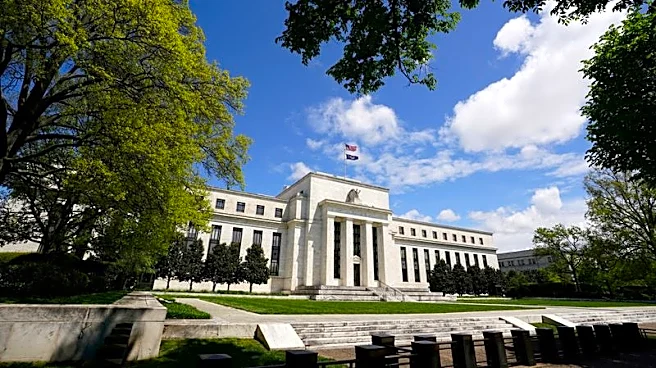
The Federal Reserve has announced its decision to maintain the interest rate paid on reserve balances at 3.65 percent, effective July 30, 2026. This decision follows the Federal Open Market Committee's (FOMC) recent meeting, where it was decided to direct
the Open Market Desk at the Federal Reserve Bank of New York to execute transactions to maintain the federal funds rate within a target range of 3-1/2 to 3-3/4 percent. The FOMC also plans to conduct standing overnight repurchase agreement operations at a rate of 3.75 percent and reverse repurchase agreement operations at 3.5 percent, with a per-counterparty limit of $160 billion per day. Additionally, the Federal Reserve will continue to purchase Treasury bills and other securities to maintain ample reserves and reinvest principal payments from agency securities into Treasury bills.
Why It's Important?
The Federal Reserve's decision to maintain the current interest rate reflects its ongoing strategy to stabilize the U.S. economy amidst fluctuating market conditions. By keeping the interest rate steady, the Federal Reserve aims to support economic growth while managing inflationary pressures. This decision impacts various stakeholders, including financial institutions, businesses, and consumers, as it influences borrowing costs and investment decisions. The maintenance of the interest rate also signals the Federal Reserve's cautious approach in navigating economic uncertainties, ensuring that monetary policy remains supportive of economic stability.
What's Next?
The Federal Reserve will continue to monitor economic indicators and market conditions to determine future monetary policy actions. The FOMC may adjust its strategies based on economic developments, including changes in inflation rates, employment figures, and global economic trends. Stakeholders, including financial markets and policymakers, will closely watch the Federal Reserve's actions for any signals of future interest rate adjustments or policy shifts. The Federal Reserve's ongoing communication and transparency will be crucial in managing market expectations and ensuring economic stability.