








What's Happening?
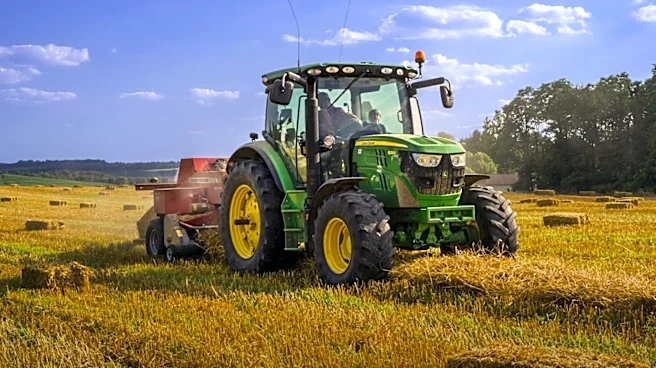
Pete Smet, a resident of Worland, Wyoming, has amassed a collection of 205 John Deere tractors on his 91-acre property, transforming it into an unofficial tourist attraction. His collection, which spans from 1920 to the early 1960s, includes nearly every
model of John Deere's A, B, 10, and 20 series, with a growing number of 30 series tractors. The rows of distinctive green tractors, interspersed with farm animal statues and flags, are visible from U.S. Highway 20, drawing the attention of travelers. Last year, tour buses en route to Yellowstone National Park began stopping at Smet's property, with visitors from around the world expressing admiration for his unique display. Smet, who grew up on a Wisconsin dairy farm, has been acquiring tractors for 45 years and estimates that about 65% of his collection remains operational.
Why It's Important?
This extensive collection highlights the cultural significance and enduring legacy of John Deere in American agriculture. For many, John Deere tractors symbolize a bygone era of farming and represent a tangible connection to the nation's agricultural heritage. The collection's appeal to international tourists underscores the global recognition of the brand and the universal fascination with historical machinery. Beyond its aesthetic and nostalgic value, Smet's collection serves as an educational resource, showcasing the evolution of tractor technology and farming practices over several decades. It also demonstrates how individual passion can create unexpected community assets, drawing tourism and fostering an appreciation for agricultural history in a rural area. The collection's ability to attract visitors from diverse backgrounds speaks to the universal language of craftsmanship and historical preservation.
What's Next?
Smet plans to continue adding to his collection, despite having a 'bad habit' of buying more tractors. He also intends to dedicate more time to working on and restoring his machines now that he is retired. His efforts to teach younger men how to work on tractors suggest a desire to pass on mechanical skills and an appreciation for these historical machines. The collection's growing popularity as a tourist stop may lead to more organized visits or even local initiatives to promote it as a unique cultural landmark in Worland. As Smet ages, the long-term future of such a large private collection will eventually become a consideration, potentially involving discussions about preservation, public display, or inheritance to ensure its continued accessibility and maintenance.
Beyond the Headlines
Pete Smet's John Deere collection is more than just a hobby; it's a testament to the deep-rooted connection between American identity and its agricultural past. In an increasingly digital and urbanized world, such collections offer a tangible link to the ingenuity and hard work that built the nation's food systems. The phenomenon of tour buses stopping at a private residence for a tractor display speaks to a broader yearning for authenticity and a connection to tangible history. It also subtly highlights the generational gap in understanding agricultural machinery, as Smet laments the lack of interest among younger generations. This collection, therefore, serves as a quiet but powerful reminder of the importance of preserving industrial heritage and fostering an appreciation for the tools that shaped American life and continue to sustain it.