





What's Happening?
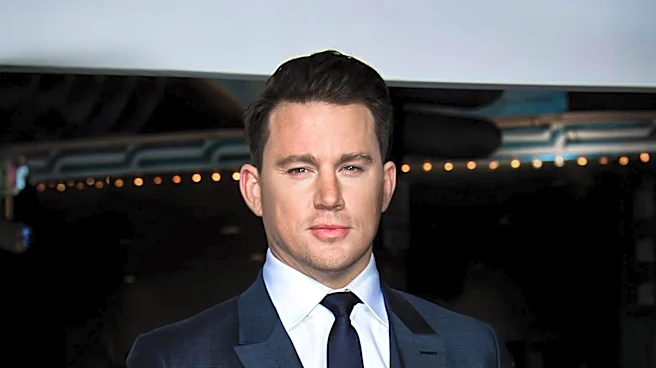
Channing Tatum recently recounted his experience auditioning for 'The Fast and the Furious: Tokyo Drift' in 2006, describing it as one of his worst auditions. He admitted to stopping midway through the process, forgetting lines, and being overwhelmed
with nerves. Tatum stated that he was primarily motivated by a desire to visit Tokyo, having never been there before. Despite the unsuccessful audition, which saw the role go to another actor, Tatum's career progressed in a different direction. He also recalled an audition for the Coen brothers' 'No Country for Old Men,' where he sought the experience despite knowing he was too young for the part, viewing it as a learning opportunity. Tatum eventually collaborated with the Coen brothers years later in 'Hail, Caesar!' in 2016. 'Tokyo Drift' itself was not a major box office success upon its release, grossing $159 million against an $85 million budget, making it the lowest-grossing film in the franchise at the time, though it has since gained a more favorable reputation among fans.
Why It's Important?
This reflection from Channing Tatum offers insight into the often-challenging early careers of successful actors in Hollywood. It highlights that even prominent figures face significant setbacks and rejections, underscoring the competitive nature of the entertainment industry. Tatum's candidness about his motivations for the 'Tokyo Drift' audition—primarily a desire for travel rather than the role itself—reveals a human element behind career decisions that are often perceived as purely strategic. His approach to the 'No Country for Old Men' audition, viewing it as a chance for growth, demonstrates a proactive mindset crucial for navigating a demanding profession. This narrative can resonate with aspiring actors and professionals in other fields, illustrating that perseverance and a willingness to learn from failures are key components of long-term success, even when initial attempts are less than stellar. It also subtly reinforces the idea that a single missed opportunity does not define a career trajectory.
What's Next?
While Tatum's past auditions are historical anecdotes, his career continues to evolve. He has transitioned from roles in films like 'Magic Mike' and '21 Jump Street' to more serious parts in movies such as 'Foxcatcher,' and has also moved into producing with projects like 'Dog' and 'Blink Twice.' His upcoming appearance as Gambit in 'Deadpool & Wolverine' indicates a continued presence in major film franchises. These career developments suggest a strategic diversification of his acting portfolio and an expansion into production, allowing him greater creative control and influence within the industry. His journey from early audition struggles to a multifaceted career serves as a testament to adaptability and continuous professional development in the dynamic landscape of Hollywood.
Beyond the Headlines
Tatum's experiences shed light on the broader psychological and professional resilience required in the entertainment industry. The pressure to perform in auditions, coupled with the high rate of rejection, can be immense. His ability to learn from a 'disastrous' audition and leverage another for personal growth speaks to a deeper understanding of career development beyond immediate success. This narrative also subtly critiques the often-glamorized image of Hollywood, revealing the grind and vulnerability behind the polished public persona of a star. It underscores that 'failure' in one instance can be a stepping stone to unexpected opportunities and a more fulfilling career path, emphasizing the importance of perspective and self-awareness in a highly scrutinized public profession. The evolution of 'Tokyo Drift' from a low-grossing film to a fan favorite also illustrates how audience perception and critical re-evaluation can shift over time, impacting the legacy of creative works.