




What's Happening?
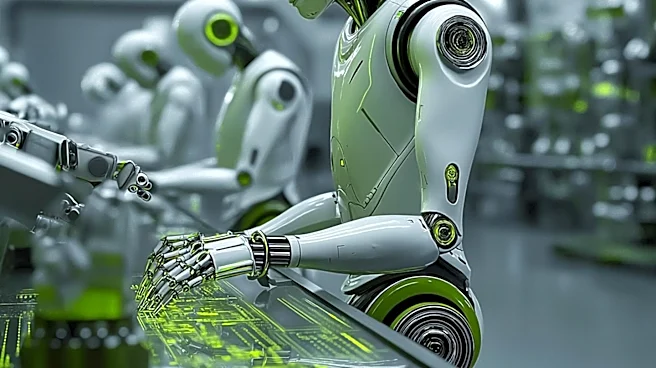
Harpak-ULMA has launched a new family of robotic loading platforms designed for hygienic processing environments. These platforms integrate single- and dual-unit modules, allowing for scalable configurations. A key feature is the direct programming of robot motion
within a Rockwell Automation PLC, enabling both robotic loading and packaging equipment to operate within the same Logix programming environment. This standardization aims to simplify support for plant teams, allowing them to use familiar tools for both types of machinery. The platforms are specifically designed for applications in industries such as cheese, fresh meat, and snacks, where stringent hygiene standards are critical. This development represents an effort to streamline automation in food processing by unifying control systems.
Why It's Important?
This new robotic loading platform from Harpak-ULMA is important for the U.S. food processing industry, particularly in sectors like cheese, fresh meat, and snacks. The integration of Rockwell Automation controls means that food manufacturers can now manage their robotic loading and packaging systems using a single, familiar programming environment. This standardization is crucial for reducing complexity, minimizing training requirements for plant personnel, and potentially lowering maintenance costs. For an industry where hygiene and efficiency are paramount, this unified control system can lead to improved operational uptime, enhanced food safety through hygienic design, and greater flexibility in production lines. Companies that adopt this technology stand to gain a competitive advantage by optimizing their automation processes, while those slower to adapt may face challenges in keeping pace with industry standards for efficiency and cost-effectiveness.
What's Next?
The introduction of Harpak-ULMA's new robotic loading platform is expected to drive further adoption of integrated automation solutions within the U.S. food processing sector. Manufacturers will likely begin evaluating and implementing these systems to enhance their production lines, focusing on the benefits of unified control and improved hygiene. We can anticipate that other automation providers may follow suit, developing similar integrated solutions to compete in this evolving market. The long-term impact could include a broader industry shift towards more standardized and interconnected automation ecosystems, potentially leading to new industry benchmarks for efficiency and safety in food production. Additionally, the demand for skilled technicians proficient in Rockwell Automation's Logix environment, capable of managing both robotic and packaging systems, is likely to increase.
Beyond the Headlines
Beyond the immediate operational benefits, Harpak-ULMA's integrated platform highlights a broader trend towards 'smart factories' in the U.S. food industry. The unification of control systems for diverse machinery components signifies a move towards more cohesive and data-driven manufacturing environments. This can lead to enhanced traceability of products, better quality control, and more efficient resource allocation, all of which have ethical implications regarding consumer safety and environmental sustainability. The reduction of human intervention in hygienic zones also minimizes contamination risks, addressing public health concerns. Culturally, this advancement could further solidify the role of automation as a cornerstone of modern food production, potentially influencing consumer perceptions of processed foods and the industry's commitment to safety and quality.