






What's Happening?
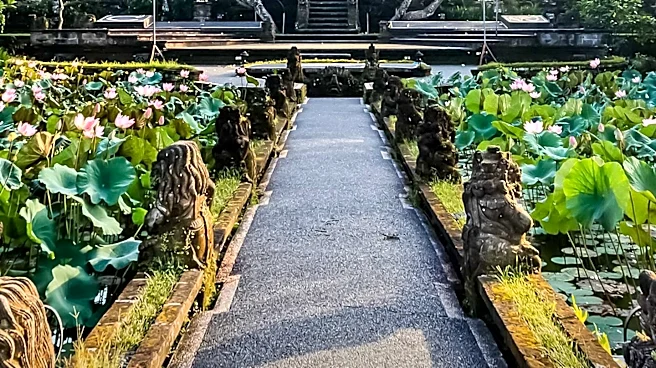
Ubud, located in Central Bali, Indonesia, is gaining recognition as a prominent cultural and spiritual center. The town is characterized by its unique architecture, tranquil environment, and a peaceful atmosphere that attracts yoga enthusiasts, artists,
and spiritual seekers. Unlike the beach party scenes of Kuta and Canggu, Ubud offers a more serene experience. The area provides a range of accommodations, from hostels to luxury hotels, catering to various budgets. Visitors can explore numerous attractions, including the Sacred Monkey Forest, art galleries, Ubud Palace, ancient temples, and traditional markets. The primary mode of transportation within Ubud is by scooter or motorbike, offering convenience and flexibility for exploring the region.
Why It's Important?
Ubud's growing popularity as a cultural and spiritual destination highlights a shift in traveler preferences towards experiences that offer enrichment and tranquility. This trend can influence the tourism industry by encouraging the development of more culturally immersive and wellness-focused travel packages. For local communities in Ubud, the influx of tourists supports local economies through increased demand for accommodations, local crafts, and traditional services like massages and healing practices. The town's emphasis on spiritual and artistic pursuits also helps preserve Balinese cultural heritage, providing a platform for local artists and spiritual leaders to share their traditions with a global audience. This focus on cultural authenticity can differentiate Ubud from other tourist destinations, attracting a specific demographic of travelers seeking deeper engagement with local customs and practices.
What's Next?
As Ubud continues to attract more visitors, there will likely be further development in its tourism infrastructure, including more diverse accommodation options and specialized wellness retreats. The local government and tourism boards may focus on sustainable tourism initiatives to manage the increased visitor numbers while preserving the town's unique cultural and natural environment. There could also be an expansion of cultural workshops, art classes, and spiritual retreats to cater to the growing interest in these areas. Additionally, efforts might be made to improve transportation and accessibility within the region, potentially introducing more eco-friendly transport options. The continued promotion of Ubud as a sanctuary for spiritual and artistic exploration is expected to solidify its position as a leading destination for mindful travel.
Beyond the Headlines
Ubud's appeal extends beyond typical tourism, tapping into a global desire for mindfulness, self-discovery, and cultural immersion. The town's reputation, partly amplified by popular culture references like 'Eat, Pray, Love,' has positioned it as a mecca for those seeking meaning and healing. This phenomenon reflects a broader societal trend where individuals are increasingly prioritizing mental well-being and authentic experiences over conventional leisure travel. The concentration of esoteric healing and meditation experts in Ubud also points to a growing market for alternative wellness practices. This cultural magnetism could lead to Ubud becoming a model for other destinations looking to cultivate a unique identity rooted in spiritual and artistic values, fostering a sustainable tourism ecosystem that benefits both visitors and local communities.