





What's Happening?
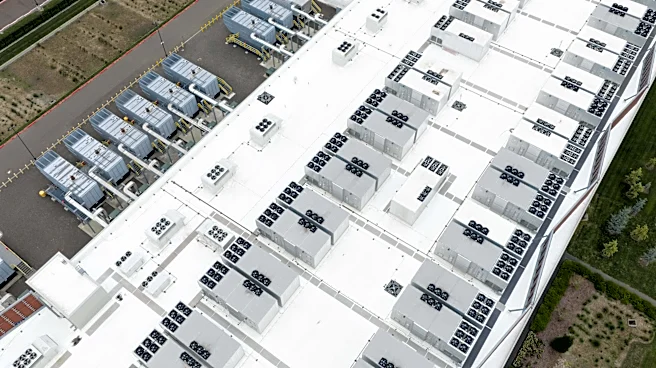
The rise of artificial intelligence (AI) data centers is creating a significant shift in the Bitcoin mining industry. According to crypto trader Ran Neuner, AI has emerged as a primary competitor to Bitcoin mining due to both sectors relying on the same
electricity supply. AI data centers reportedly generate between $200 to $500 per megawatt, compared to Bitcoin mining's $57 to $129 per megawatt, making the financial incentive to switch clear. Major Bitcoin mining companies are already pivoting towards AI infrastructure. Core Scientific has secured up to $1 billion in credit for AI hosting, MARA Holdings is planning to sell some of its Bitcoin to focus on AI, and Hut 8 has signed a $7 billion AI infrastructure agreement with Google. This shift has led to a 14.5% drop in Bitcoin's hash rate since its peak in October, raising concerns about network security.
Why It's Important?
The transition from Bitcoin mining to AI infrastructure has significant implications for the cryptocurrency market and energy consumption patterns. As more miners redirect resources to AI, Bitcoin's network security could be at risk due to fewer miners maintaining the network. This situation differs from past market downturns because the energy that would typically return to Bitcoin mining is now being absorbed by AI. However, some experts, like Bitcoin pioneer Adam Back, argue that the network's difficulty adjustment mechanism will stabilize the situation. The shift also highlights the growing economic viability of AI, which could lead to increased investment and innovation in the sector. This trend may influence energy policies and the allocation of resources, impacting both the tech and cryptocurrency industries.
What's Next?
The future of Bitcoin mining will likely depend on the cryptocurrency's market performance and the continued profitability of AI infrastructure. A sustained recovery in Bitcoin prices could incentivize miners to return, potentially balancing the current shift towards AI. Additionally, the ongoing development of AI technology and its applications may further drive the demand for data centers, influencing energy consumption and infrastructure investments. Stakeholders in both industries will need to adapt to these changes, potentially leading to new business models and partnerships.
Beyond the Headlines
The competition between AI and Bitcoin mining raises broader questions about energy consumption and sustainability. Bitcoin mining has been criticized for its environmental impact, and the shift towards AI could exacerbate these concerns if not managed properly. However, Bitcoin ESG specialist Daniel Batten suggests that Bitcoin mining's ability to use stranded energy and act as a flexible load balancer offers structural advantages that could benefit AI data centers. This dynamic may lead to innovative solutions for energy efficiency and sustainability in both sectors.