

What's Happening?
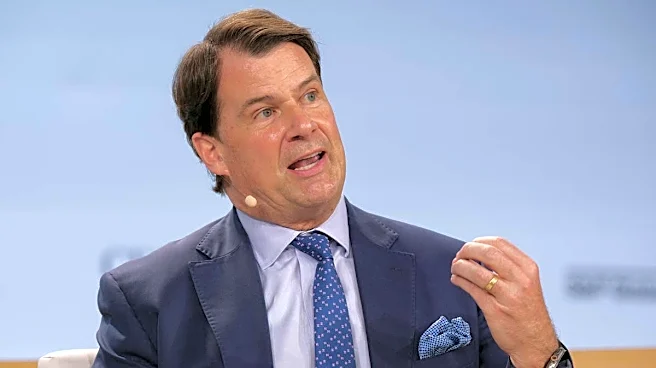
Ford CEO Jim Farley has expressed his belief that Chinese automakers will enter the U.S. market within the next five to ten years, despite existing trade barriers and legislation aimed at preventing this. During a recent town hall meeting with employees,
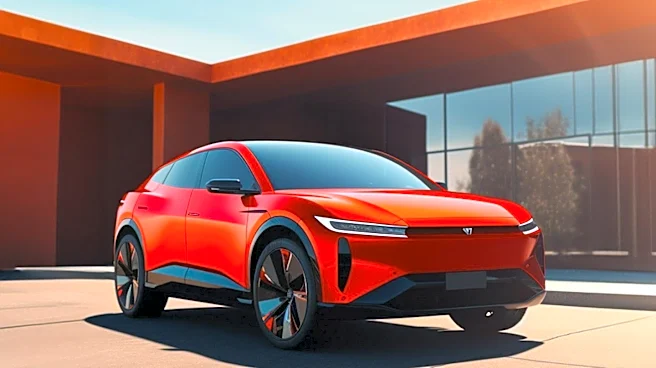
Farley emphasized the inevitability of Chinese cars reaching American shores, citing the competitive nature of these automakers. Ford is preparing to introduce a range of affordable electric vehicles designed to compete with Chinese models. The U.S. currently imposes a 100% tariff on Chinese electric vehicles and has rules banning Chinese software and hardware in vehicles by 2027 and 2030, respectively. These measures were implemented under President Biden and maintained by President Trump.
Why It's Important?
The potential entry of Chinese automakers into the U.S. market could significantly impact the American automotive industry. Chinese companies have already gained market share in Mexico and Canada, indicating their growing influence in North America. If Chinese cars become available in the U.S., it could lead to increased competition, particularly in the electric vehicle sector, where affordable options are currently limited. This development could pressure U.S. automakers to enhance their offerings and reduce prices to maintain market share. Additionally, the presence of Chinese vehicles could influence trade policies and economic relations between the U.S. and China.
What's Next?
For Chinese automakers to successfully enter the U.S. market, significant changes in trade policies and tariffs would be necessary. The U.S. government may need to reconsider its current stance on Chinese vehicle imports, potentially leading to negotiations or adjustments in trade agreements. Meanwhile, U.S. automakers like Ford are likely to continue developing competitive electric vehicles to prepare for the anticipated market shift. The automotive industry and policymakers will closely monitor these developments, as they could reshape the competitive landscape and influence future trade relations.