



What's Happening?
Jamieson Greer, the United States Trade Representative, announced on November 20, 2026, that Section 301 trade investigations into major trading partners, including South Korea, will conclude by the end of the year. Greer, who assumed his role in February
2025, previously served as a Partner at King & Spalding and Chief of Staff at the Office of the U.S. Trade Representative. While he confirmed the completion timeline for these investigations, he did not specify which countries might face new tariffs as a result. The Section 301 investigations are a tool used by the U.S. government to address unfair trade practices by foreign countries. This announcement signals a potential shift in U.S. trade policy towards several key economic partners, with implications for global trade relations and specific industries.
Why It's Important?
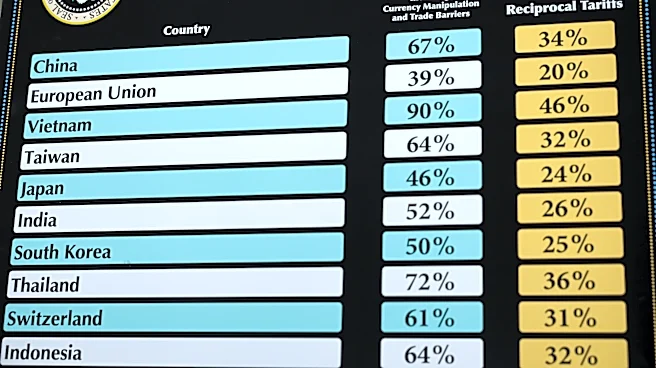
The completion of these Section 301 investigations carries significant weight for global trade and U.S. economic interests. The potential imposition of new tariffs on major trading partners could disrupt existing supply chains, increase costs for U.S. consumers and businesses, and trigger retaliatory measures from affected countries. Industries reliant on international trade, such as manufacturing, agriculture, and technology, could face increased uncertainty and operational challenges. Conversely, domestic industries that compete with imports from targeted countries might see a competitive advantage. The decision to impose tariffs or other trade remedies will reflect the U.S. administration's stance on fair trade and its willingness to use punitive measures to enforce its trade agenda. This could also influence future trade negotiations and the broader multilateral trading system.
What's Next?
Following the completion of the Section 301 investigations by the end of 2026, the United States Trade Representative's office is expected to announce its findings and any subsequent actions, which could include the imposition of new tariffs or other trade restrictions. Affected trading partners, such as South Korea, will likely assess the implications of these decisions and may consider their own responses, potentially leading to further trade disputes. Businesses operating in sectors that could be impacted by new tariffs will need to prepare for potential changes in import costs, supply chain logistics, and market access. The announcements will also be closely watched by international trade organizations and other countries, as they could set precedents for future trade enforcement actions.
Beyond the Headlines
The ongoing Section 301 investigations and their impending conclusion highlight a broader trend in U.S. trade policy towards more assertive enforcement of perceived unfair trade practices. This approach reflects a strategic effort to rebalance trade relationships and protect domestic industries, potentially signaling a move away from purely free-trade principles towards a more managed trade environment. The use of Section 301, a unilateral trade enforcement tool, also raises questions about its compatibility with multilateral trade rules and its potential to strain international diplomatic relations. The outcomes of these investigations could contribute to a more fragmented global trading system, where bilateral disputes become more common, and the role of international trade bodies is diminished. This shift could have long-term implications for global economic cooperation and stability.