



What's Happening?
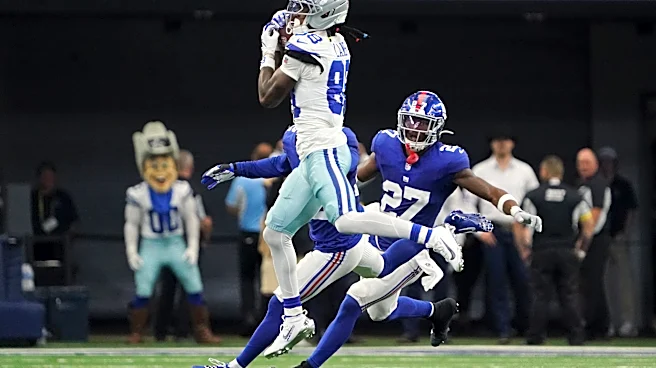
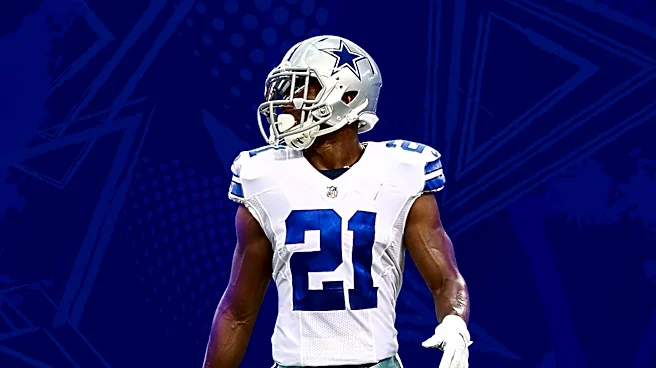
Ezekiel Elliott, a prominent running back for the Dallas Cowboys, is being highlighted in a historical review of top-10 overall draft picks at the running back position. His rookie season performance in 2016 is specifically noted, where he recorded 20 rushes
for 51 yards and one touchdown, along with one reception for one yard, in a 19-20 loss against the New York Giants. This initial outing yielded 12.2 PPR points. The analysis compares Elliott's debut to 23 other running backs drafted in the top-10 over the last 30 years. While some backs like LaDainian Tomlinson and Adrian Peterson had immediate 'big numbers' in their first games, Elliott's initial performance was categorized as 'not great but credible,' preceding what became a 'phenomenal rookie year.' The review indicates that half of these 24 top-10 backs, including Elliott, did not achieve significant production in their very first games, with 12 finishing with single-digit PPR scores.
Why It's Important?
This historical comparison provides valuable context for evaluating the immediate impact and long-term potential of high-draft-pick running backs in the NFL. For teams investing significant draft capital in a running back, understanding the typical trajectory, including initial game performance versus overall rookie season success, is crucial. Elliott's case demonstrates that a modest debut does not necessarily predict a player's full rookie year or career success. This insight can influence team management decisions regarding player development, playing time, and expectations for highly touted rookies. It also informs fantasy football enthusiasts and analysts, suggesting that patience may be warranted for top-tier running back prospects who don't immediately dominate in their first professional game. The data underscores the variability in how quickly top-drafted running backs adapt to the NFL, impacting both on-field strategy and financial investments in player contracts.
What's Next?
While the article primarily focuses on historical data, the ongoing performance of current top-10 drafted running backs, such as Jeremiyah Love and Ashton Jeanty, will continue to be measured against these benchmarks. Teams will likely use such historical data to manage expectations for their own rookie running backs, particularly those selected early in the draft. For players like Jeremiyah Love, whose debut is anticipated, their initial game statistics will be scrutinized and compared to the patterns observed in players like Ezekiel Elliott. This ongoing evaluation will influence coaching decisions regarding player utilization and development throughout their rookie seasons and beyond. The trend of some top-10 backs having slower starts but ultimately successful rookie years suggests that teams may adopt a more patient approach with their high-value draft picks.
Beyond the Headlines
The analysis delves into the broader narrative surrounding player development and the pressure on high-draft-pick athletes. It highlights the psychological and strategic implications for both players and teams when a top-10 pick doesn't immediately deliver 'big numbers.' The expectation for instant impact can be immense, yet the data suggests that a significant portion of successful running backs require time to fully adapt to the professional level. This challenges the 'instant gratification' mindset often prevalent in professional sports and among fans. Furthermore, it underscores the complexity of talent evaluation and projection, as a player's long-term success is not solely determined by their very first game. The study implicitly advocates for a more nuanced understanding of rookie performance, recognizing that a 'phenomenal rookie year' can still follow a 'not great but credible' debut.