



What's Happening?
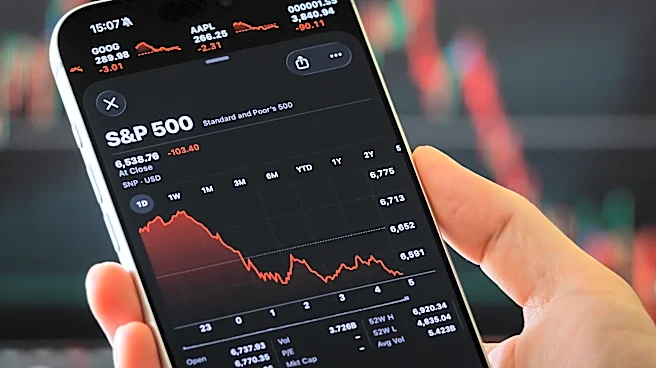
The S&P 500 experienced a significant downturn, falling 3.70% on Friday, November 20, 2026, marking its seventh consecutive loss. This decline brought the index to 6,910.39, its lowest closing point since April 13. Over the entire week, the S&P 500 lost
8.6% of its value. The benchmark is now 11.6% below its record close of 7,818.93, achieved on October 6. Financial commentator Jim Cramer noted on X that the market 'sliced right through' his S&P 500 target of 6,900 intraday, although the index managed to close slightly above it. The year-to-date gain for the S&P 500, measured from its December 31, 2025 close of 6,845.50, is now only about 0.95%, indicating that most of the year's gains have been erased since early October. The State Street SPDR S&P 500 ETF Trust (SPY) is heavily influenced by tech stocks like NVIDIA, which constitutes about 8% of the fund, making it susceptible to tech sector weakness.
Why It's Important?
This sharp decline in the S&P 500 signals growing investor concern and potential market instability. A seven-day losing streak and a nearly 9% weekly drop indicate a significant shift in market sentiment, moving from bullish to bearish. The S&P 500's performance is a key indicator of the overall health of the U.S. economy and corporate profitability. Such a rapid fall can erode investor confidence, potentially leading to reduced consumer spending and business investment. For individual investors, particularly those nearing retirement or relying on their portfolios for income, these losses can be substantial. The market's inability to hold key technical levels, as highlighted by Jim Cramer's target being breached intraday, suggests that previous support levels are weakening, which could signal further volatility. The concentration of the SPY ETF in a few large tech companies also highlights a vulnerability, where the performance of a few stocks can disproportionately impact the broader market.
What's Next?
Following this significant market correction, investors and analysts will be closely watching for signs of stabilization or further declines. Jim Cramer's comment about needing to 'reconfigure this weekend' suggests that market strategists will be reassessing their outlooks and potentially adjusting their investment recommendations. The market's reaction in the coming trading sessions will be crucial in determining if this is a temporary pullback or the beginning of a more prolonged downturn. Companies will likely face increased scrutiny regarding their earnings forecasts and guidance, especially those in the technology sector. Investors may shift towards more defensive assets or re-evaluate their risk exposure. The Federal Reserve's monetary policy decisions and upcoming economic data releases will also play a significant role in shaping market sentiment and direction in the immediate future.
Beyond the Headlines
The recent market performance could trigger broader discussions about market valuations and the sustainability of growth in certain sectors, particularly technology. The heavy weighting of a few tech giants in major indices like the S&P 500 raises questions about market concentration risk and the potential for systemic impact if these companies face significant headwinds. This downturn might also prompt a re-evaluation of investment strategies, with a potential shift away from growth-oriented stocks towards value or dividend-paying stocks, as investors seek more stability. Furthermore, the psychological impact of such rapid losses can be profound, potentially leading to panic selling by retail investors and a general increase in market fear. This could also influence regulatory discussions regarding market oversight and mechanisms to prevent excessive volatility, especially if the downturn persists or deepens.