





What's Happening?
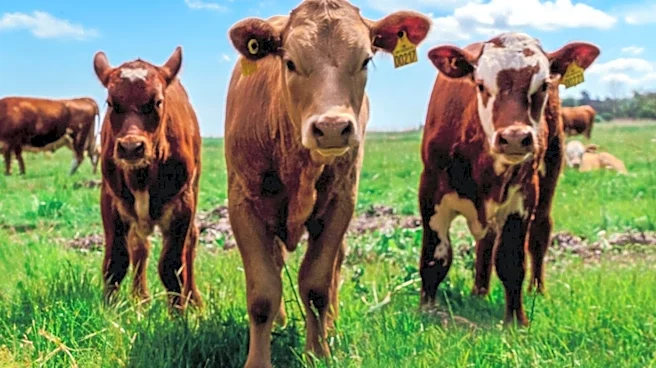
The Iowa Cattlemen’s Association has introduced its 'Building Iowa’s Cattle Future' plan, a 2027 legislative framework aimed at supporting cattle herd growth in the state. This initiative comes as the American cowherd has reached a 75-year low, a situation
attributed to factors such as drought, high input costs, and policy volatility that have led producers to liquidate breeding stock. The plan seeks to create stability and access within the cattle industry while promoting herd expansion. Key proposals include modernizing the Beginning Farmer Loan Program, increasing access to capital, and expanding tax credits to assist new generations in acquiring livestock and land. Additionally, the association is advocating for a reduction in permit costs, an expansion of regional meat processing capacity, and protection for agricultural land against eminent domain. The CEO of the Iowa Cattlemen’s Association, Bryan Whaley, highlighted recent market volatility caused by the suspension of tariffs on foreign beef imports and the closure of a major processing plant in Illinois, which processed over 50% of its cattle from Iowa, as significant challenges facing the industry.
Why It's Important?
The decline in the U.S. cattle herd to its lowest level in 75 years has significant implications for the beef industry and the broader U.S. economy. High beef prices are a direct consequence of this reduced supply, driven by factors like severe drought and increased production expenses. The Iowa Cattlemen's Association's plan is crucial because Iowa is seen as strategically positioned to contribute to rebuilding the national herd, possessing diverse resources and topography suitable for cattle raising. The proposed measures, such as modernizing loan programs and expanding tax credits, aim to lower financial barriers for new and existing cattle producers, fostering long-term sustainability and growth in the sector. Expanding regional meat processing capacity would also reduce reliance on large, centralized plants, mitigating risks associated with closures and improving market access for local producers. Protecting agricultural land from eminent domain ensures the continued availability of grazing and farming areas essential for cattle operations. Without such interventions, the U.S. could face prolonged periods of high beef prices and increased dependence on foreign beef imports, impacting consumers and the economic viability of domestic cattle ranchers.
What's Next?
The Iowa Cattlemen’s Association will now focus on advocating for its 'Building Iowa’s Cattle Future' legislative framework with state lawmakers. The success of this plan hinges on the willingness of the Iowa legislature to adopt the proposed changes, including modernizing loan programs, expanding tax credits, and addressing permit costs. If enacted, these measures could provide a more stable and attractive environment for cattle producers, potentially leading to an increase in heifer retention and overall herd growth in Iowa. The association also aims to influence policy regarding regional meat processing capacity and agricultural land protection. The outcome of these legislative efforts will likely be closely watched by other states facing similar challenges in their cattle industries. Furthermore, the industry will continue to monitor federal policies, such as those related to foreign beef imports, which have recently contributed to market volatility. The effectiveness of this plan in reversing the trend of herd liquidation will be a key indicator of its success in the coming years.
Beyond the Headlines
The efforts by the Iowa Cattlemen’s Association to rebuild the state’s cattle herd extend beyond immediate economic concerns, touching upon broader issues of food security, rural economic development, and environmental sustainability. A robust domestic cattle industry contributes to national food security by reducing reliance on international markets, which can be susceptible to geopolitical and logistical disruptions. From a rural development perspective, supporting cattle ranching through financial incentives and reduced regulatory burdens can revitalize rural economies, create jobs, and maintain agricultural traditions. The plan's emphasis on protecting agricultural land also highlights the importance of sustainable land use and conservation, ensuring that vital resources remain available for future generations of farmers. However, the challenge lies in balancing economic incentives with environmental considerations, particularly regarding the impact of cattle farming on greenhouse gas emissions and land degradation. The long-term success of such initiatives will depend on integrating sustainable practices and adapting to evolving climate conditions, ensuring that herd rebuilding efforts contribute to a resilient and environmentally responsible agricultural sector.