





What's Happening?
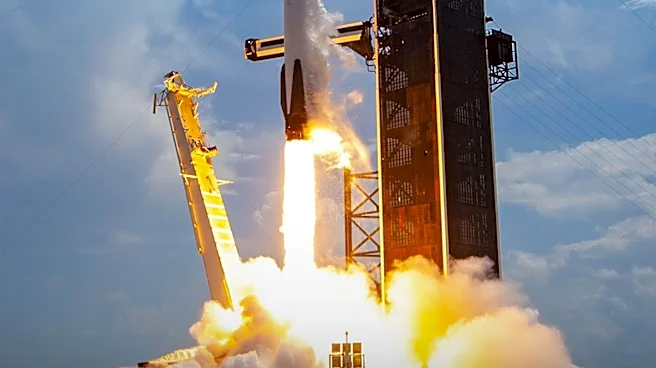
Launch services provider SEOPS has announced a second dedicated rideshare mission, Waymaker-1, on a Falcon 9 rocket, scheduled for early 2028. This mission will deliver payloads to a mid-inclination orbit. The decision to add Waymaker-1 comes less than
three months after SEOPS announced its first dedicated rideshare mission, Waymaker-2, which is set for late 2028 and is reportedly over 90% sold out. According to Evan Hoyt, president of SEOPS, the high demand for launch services, particularly for low Earth orbit, prompted the expansion. The new mission utilizes a Falcon 9 originally intended for a geostationary transfer orbit (GTO) mission, Darkstar-1, which has been delayed due to customer program maturation issues. This strategic shift by SEOPS is a response to industry concerns that SpaceX may be winding down its own dedicated Falcon 9 rideshare programs after late 2028 or early 2029, leading satellite operators to seek alternative launch solutions.
Why It's Important?
The expansion of SEOPS's dedicated rideshare missions highlights a significant shift in the commercial space launch market. Many satellite operators have historically relied on SpaceX's Falcon 9 rideshare program for affordable and regular access to orbit. The potential wind-down of SpaceX's dedicated rideshare offerings creates a void that companies like SEOPS are rapidly moving to fill. This development is crucial for the U.S. space industry as it indicates a growing diversification of launch service providers, which could enhance competition and provide more robust options for satellite deployment. For smaller satellite operators and those with less flexible launch schedules, the availability of dedicated rideshare missions from other providers ensures continued access to space, preventing potential bottlenecks and delays in deploying critical satellite infrastructure. The increased demand for launch services also underscores the rapid growth of the satellite industry, driven by various applications from communication to Earth observation.
What's Next?
SEOPS plans to continue expanding its Waymaker mission series and is in discussions with other launch companies beyond SpaceX to offer a broader portfolio of launch options. This suggests a future where customers will have more choices regarding launch vehicles, schedules, and destinations. The transition away from a heavy reliance on a single provider for rideshare services is likely to accelerate, with other launch service providers potentially following SEOPS's lead in securing dedicated missions. Satellite operators will need to adapt their planning to book launches years in advance, as demand continues to outpace immediate availability. The market will likely see increased investment in launch capabilities and a more competitive landscape as companies vie to meet the growing demand for access to low Earth orbit and other orbital destinations.
Beyond the Headlines
This development points to a broader trend in the commercial space sector: the maturation and diversification of the launch market. While SpaceX has been a dominant force, its potential shift away from dedicated rideshare programs on Falcon 9 towards other priorities, such as its Starship program, opens up significant opportunities for other players. This could lead to a more resilient and distributed launch ecosystem, reducing the risks associated with relying on a single provider. Furthermore, the need for customers to book launches years in advance reflects the intense demand for orbital access, driven by the proliferation of small satellites and the expansion of satellite constellations. This trend could also spur innovation in launch vehicle technology and operational efficiency as companies seek to offer more flexible and cost-effective solutions to attract customers in a competitive environment.