






What's Happening?
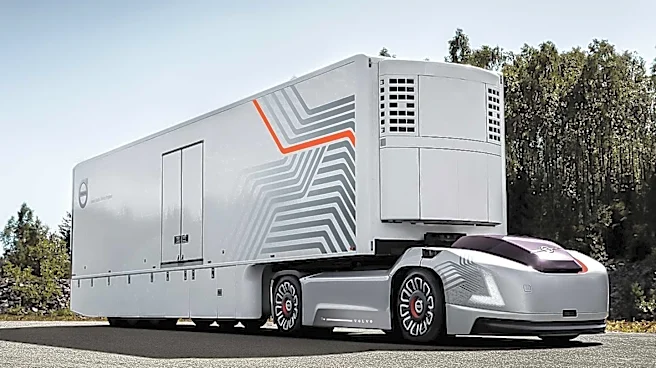
Volvo Autonomous Solutions (VAS) and Waabi have initiated autonomous freight operations in Texas for their first customer, Warp, a logistics software company. The Volvo VNL Autonomous trucks, equipped with the Waabi Driver autonomous driving technology,
are now transporting freight directly to third-party facilities along the Dallas-Houston corridor. This marks a significant milestone in the partnership between Volvo and Waabi, enabling Warp to utilize autonomous transport for its less-than-truckload (LTL) and full-truckload freight services. The operations integrate VAS’s Autona / freight autonomous transport ecosystem with Warp’s freight network, aiming to optimize freight flows and enhance the efficiency of goods movement. The Volvo VNL Autonomous trucks are specifically designed for autonomy, featuring redundancies for six safety-critical systems and built to integrate autonomous driving systems from partners like Waabi. Currently, these autonomous hauls are conducted with an observer present in the driver’s seat.
Why It's Important?
This launch signifies a critical step forward in the commercialization and scaling of autonomous freight transportation in the United States. By deploying autonomous trucks in a demanding logistics corridor like Dallas-Houston, Volvo and Waabi are demonstrating the practical application and potential of this technology in real-world customer operations. The integration of autonomous capabilities into LTL networks, which are known for their operational complexity and tight schedules, offers a more predictable way to maintain network timelines by moving freight directly between facilities without handoffs. This can lead to increased efficiency, reduced operational costs, and improved reliability for logistics providers. The collaboration also highlights the growing ecosystem of partnerships between truck manufacturers, autonomous driving technology developers, and logistics companies, all working to transform the freight industry. The data and experience gathered from these operations will be crucial for refining the technology and preparing for broader deployment across more routes.
What's Next?
With customer operations now underway, Volvo Autonomous Solutions and Waabi will leverage the real-world experience gained from the Dallas-Houston corridor to further develop and refine their autonomous freight solutions. This practical application will inform preparations for expanding to additional routes and support the broader scaling of autonomous freight in the coming years. The immediate next steps involve continuously improving the Autona / freight ecosystem based on operational feedback and performance data. The partnership aims to demonstrate that the Volvo VNL Autonomous, powered by the Waabi Driver, can handle the full spectrum of real-world freight demands, including complex LTL networks and direct deliveries to third-party facilities. As the technology matures and regulatory frameworks evolve, the presence of an observer in the driver's seat is expected to transition towards fully driverless operations, further enhancing the economic benefits of autonomous trucking.
Beyond the Headlines
The deployment of autonomous freight operations by Volvo and Waabi with Warp in Texas has deeper implications for the future of the logistics industry and the broader economy. It signals a shift towards more automated and data-driven supply chains, which could lead to significant reductions in labor costs, fuel consumption through optimized driving patterns, and improved safety by mitigating human error. This development also raises questions about the future of truck driving jobs and the need for workforce retraining in new roles related to autonomous fleet management and maintenance. Furthermore, the success of these operations could accelerate the adoption of autonomous technology in other sectors of transportation, potentially transforming how goods are moved across the country. The collaboration also underscores the importance of robust safety protocols and regulatory clarity as autonomous vehicles become more prevalent on public roads, shaping public perception and acceptance of this transformative technology.