



What's Happening?
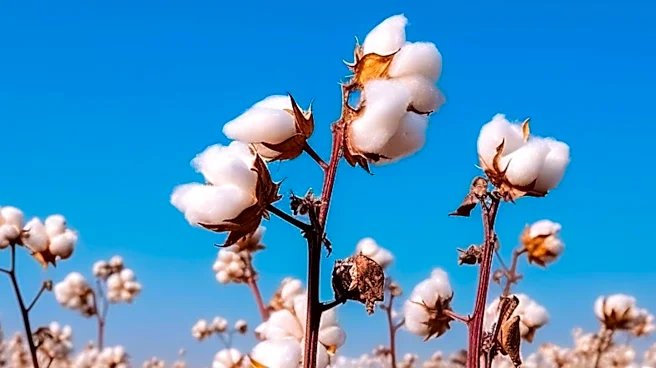
The Qatari company Baladna is currently evaluating the establishment of a cotton production project in Algeria. The primary objective of this initiative is to supply the textile industries within Algeria. This potential investment is part of a broader
trend of foreign investments flowing into Algeria, with the country anticipating that the value of foreign investments, including registered projects and confirmed intentions, will exceed $5 billion during 2026. This projection is driven by anticipated projects with investors from various countries, including Egypt, Saudi Arabia, Oman, and Qatar. Mr. Omar Rekkache, Director General of the Algerian Investment Promotion Agency, confirmed these expectations. The agency is actively monitoring approximately 68% of 15,000 investment projects, with 2,000 already operational.
Why It's Important?
The potential cotton production project by Baladna in Algeria holds significant importance for Algeria's textile industry, aiming to establish a local supply chain for raw materials. This could reduce reliance on imported cotton, enhance the competitiveness of Algerian textile manufacturers, and create new agricultural jobs. For the U.S., while not a direct economic impact, such developments in global agricultural and textile supply chains can influence international trade dynamics. A more self-sufficient Algerian textile industry might alter demand for cotton from other global suppliers, including the U.S., which is a major cotton exporter. Furthermore, increased foreign investment in Algeria, particularly from Gulf states, signifies a shifting economic landscape in North Africa, potentially opening new markets or altering existing trade relationships that U.S. businesses might be involved in. This also highlights the growing trend of Gulf companies expanding their agricultural investments internationally to secure food and raw material supplies.
What's Next?
The Qatari company Baladna is in the study phase for its cotton production project in Algeria, indicating that a final decision on the investment is pending. If approved, the next steps would involve land acquisition, infrastructure development, and the implementation of agricultural practices for cotton cultivation. Concurrently, the Algerian Investment Promotion Agency will continue to monitor the progress of this and other foreign investment projects, aiming to facilitate their completion and operationalization. The broader goal for Algeria is to reach over $5 billion in foreign investments by 2026, which will involve ongoing consultations and agreements with investors from various countries. The success of projects like Baladna's could serve as a model for future foreign direct investments in Algeria's agricultural and industrial sectors.
Beyond the Headlines
Baladna's exploration of cotton production in Algeria underscores a strategic move towards vertical integration and supply chain resilience within the textile industry. This initiative could have profound implications for Algeria's agricultural sector, potentially leading to modernization, technology transfer, and improved farming techniques. From a broader perspective, it reflects a growing trend among Gulf companies to invest in agricultural projects abroad to enhance food security and raw material independence, driven by concerns over global supply chain disruptions and climate change. This also highlights Algeria's efforts to diversify its economy beyond hydrocarbons and attract foreign capital into various sectors. The success of such projects could foster greater economic cooperation between North Africa and the Gulf region, potentially leading to new trade routes and economic alliances that could reshape regional economic dynamics.