






What's Happening?
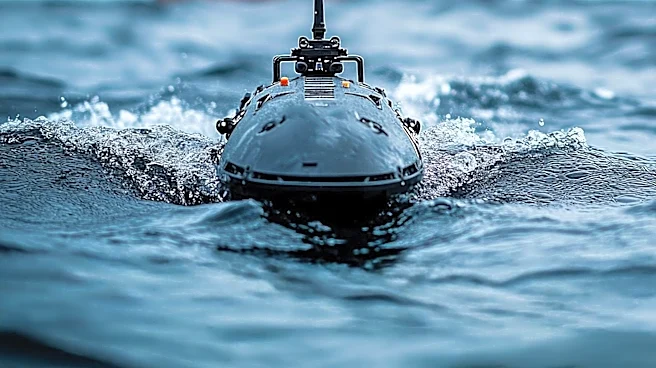
French maritime robotics company Exail has completed successful sea trials of its DriX O-16, a 51-foot uncrewed boat equipped with a tethered drone system. The drone, developed by Elistair, can remain airborne for 24 hours without landing, thanks to a 230-foot
tether that supplies power and transmits video at 100 megabits per second. This system, which weighs 70.5 pounds, can become airborne in under two minutes and operates effectively even when satellite navigation is jammed. The trials demonstrated the system's capability to extend the range of maritime surveillance significantly, with the drone able to hover at a height of 197 feet, increasing the visible range from six miles to 19 miles. The trials were conducted remotely from Exail's operations center in La Ciotat, France, highlighting the potential for uncrewed maritime surveillance.
Why It's Important?
The successful testing of Exail's tethered drone system marks a significant advancement in maritime surveillance technology. By enabling extended aerial observation without the need for human presence on the vessel, this system could revolutionize how coastal waters, shipping lanes, and offshore assets are monitored. The ability to operate in GPS-jammed environments and maintain radio silence enhances its utility in sensitive or hostile areas. This development could lead to cost savings and increased efficiency in maritime operations, as it reduces the need for manned patrols and large crewed vessels. The technology's potential applications extend beyond military use, with implications for commercial sectors such as telecommunications and oceanographic research, as evidenced by its adoption by a Malaysian telecoms contractor and a Portuguese research institute.
What's Next?
Following the successful trials, Exail's tethered drone system is poised for broader adoption in various maritime sectors. The company is likely to pursue further commercialization opportunities, targeting industries that require extensive maritime surveillance capabilities. Regulatory approvals and potential partnerships with defense and commercial entities could shape the system's deployment. Additionally, the ongoing acquisition of Exail by Thales, expected to close by 2028, may influence the strategic direction and market reach of this technology. As the system proves its operational viability, it may prompt other companies to develop similar uncrewed surveillance solutions, potentially leading to increased competition and innovation in the field.
Beyond the Headlines
The introduction of Exail's tethered drone system could have broader implications for maritime security and environmental monitoring. By reducing the need for human presence at sea, the system could lower operational risks and environmental impact, aligning with global efforts to reduce carbon footprints. The technology also raises questions about the future of maritime labor, as automation continues to replace traditional roles. Ethical considerations regarding surveillance and data privacy may arise, particularly in international waters where jurisdictional boundaries are less clear. As the technology matures, it may also influence regulatory frameworks governing uncrewed maritime operations.