
What's Happening?
General Dynamics Electric Boat and the New England Institute of Technology (NEIT), in collaboration with the U.S. Navy Submarine Industrial Base (SIB), have announced a significant expansion of their training
partnership for the submarine workforce in Rhode Island. This expansion involves NEIT retrofitting its Warwick campus, tripling the training space from 30,000 sq. ft. to 100,000 sq. ft. to serve as Electric Boat's primary workforce training center in the state. The new facility, known as the Shipbuilding Advanced Institute for Learning (SAIL), aims to prepare 3,000 new employees annually to meet Electric Boat's need for 8,000 new hires. Congressman Gabe Amo praised this investment, highlighting its role in strengthening Rhode Island's 'Blue Economy' and preparing residents for well-paying jobs in the shipbuilding industry. The expansion is supported by $20 million from the U.S. Navy's Submarine Industrial Base and $25 million from General Dynamics Electric Boat.
Why It's Important?
This expansion is critically important for several reasons. Firstly, it directly addresses the significant workforce demands of the U.S. Navy's submarine industrial base, which is essential for national security. The need for 8,000 new employees at Electric Boat underscores the strategic importance of this sector. Secondly, it represents a substantial investment in workforce development and vocational training, providing thousands of Rhode Islanders with access to high-skill, well-paying jobs. This can lead to significant economic benefits for the state, including increased employment, higher wages, and a stronger local economy. Thirdly, the partnership between industry, academia, and government exemplifies a successful model for addressing skilled labor shortages and fostering economic growth. Congressman Amo's support emphasizes the bipartisan recognition of the importance of such initiatives for both economic prosperity and national defense. The tripling of training capacity will ensure a steady pipeline of skilled workers, crucial for maintaining the pace of submarine production required by the U.S. Navy.
What's Next?
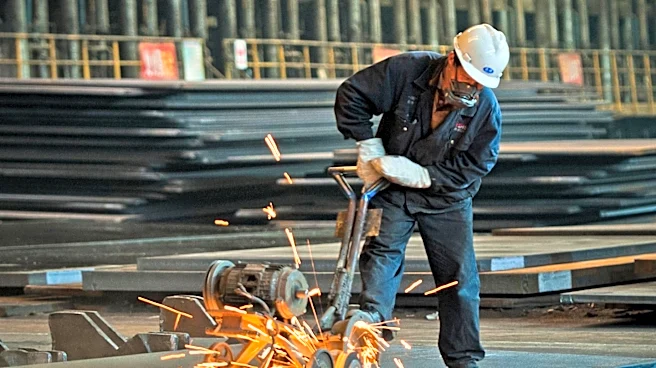
The newly expanded Shipbuilding Advanced Institute for Learning (SAIL) at NEIT's Warwick campus will soon begin training approximately 3,000 new hires per year. These trainees will undergo instruction in various trades, including welding, shipfitting, pipefitting, machining, and electrical work, before transitioning to Electric Boat's Quonset Point shipyard. In addition to new hire training, the facility will also accommodate recurring training, recertification, and upskilling for existing employees. The continued collaboration between Electric Boat, NEIT, and the U.S. Navy Submarine Industrial Base is expected to further strengthen Rhode Island's defense manufacturing pipeline. Political leaders, including Congressman Amo, will likely continue to monitor the program's success and advocate for additional resources or policies that support workforce development in critical industries. The long-term goal is to ensure the U.S. Navy's ability to deliver submarines at the required pace, while simultaneously providing sustainable career pathways for Rhode Islanders.
Beyond the Headlines
This initiative goes beyond simply training workers; it signifies a strategic national effort to bolster the U.S. defense industrial base and maintain technological superiority. The investment in shipbuilding training reflects a recognition that a strong national defense relies not only on advanced technology but also on a highly skilled workforce capable of producing and maintaining complex military assets. The partnership also highlights the evolving role of educational institutions in meeting specific industry needs, moving beyond traditional academic models to provide targeted vocational training. Furthermore, the focus on Rhode Island's 'Blue Economy' underscores the importance of maritime industries to the state's economic identity and future. This expansion could also inspire similar public-private partnerships in other states and industries facing skilled labor shortages, demonstrating a model for addressing critical workforce gaps through collaborative investment and specialized training programs. The long-term implications include enhanced national security, sustained economic growth in key regions, and a more resilient domestic manufacturing sector.