





What's Happening?
Alphabet Inc. (NASDAQ:GOOG) (NASDAQ:GOOGL) stock experienced a 2.5% decline as of 1:55 p.m. ET on Wednesday, November 25. This drop followed the cost of insuring the company's debt, specifically its five-year credit default swap (CDS) spreads, reaching
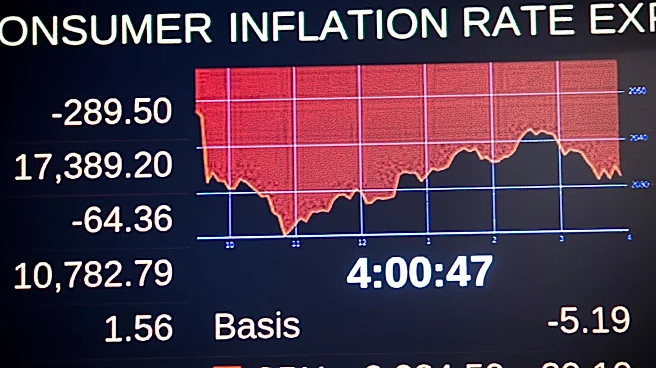
a record high. This surge in CDS spreads indicates increased investor concern regarding Alphabet's financial stability and its ability to generate returns from substantial investments. The company's capital spending significantly increased to $51.4 billion in the third quarter, resulting in a negative free cash flow of $9.1 billion. To cover this gap, Alphabet has been borrowing heavily. This financial situation, coupled with new inflation data showing the Federal Reserve's preferred metric at 3.8% year over year, twice its target, has led investors to anticipate rising borrowing costs, further impacting growth stocks like Alphabet.
Why It's Important?
The record high cost of insuring Alphabet's debt signals a growing apprehension among investors about the company's aggressive spending on artificial intelligence (AI) initiatives. This trend suggests that the market is questioning the potential return on investment for these large-scale AI ventures. For the broader U.S. business landscape, this development highlights the increasing scrutiny on tech giants' capital allocation strategies, especially in emerging, high-cost sectors like AI. If a company of Alphabet's stature faces such market skepticism, it could influence investment patterns across the technology sector, potentially making investors more cautious about funding other companies with similar high-investment, long-term return profiles. The expectation of rising borrowing costs due to persistent inflation further exacerbates these concerns, as it directly impacts the profitability and financial flexibility of companies relying on debt financing.
What's Next?
In the immediate future, Alphabet will likely face continued pressure to demonstrate tangible returns from its substantial AI investments. Investors will be closely monitoring upcoming earnings reports for signs of improved free cash flow and clearer pathways to profitability from these ventures. The broader market will also be watching the Federal Reserve's actions regarding interest rates, as any further hikes could increase Alphabet's borrowing costs and intensify financial strain. The company may need to articulate a more compelling strategy for its AI monetization to alleviate investor concerns and stabilize its debt insurance costs. Furthermore, the performance of other tech companies heavily invested in AI, such as SpaceX, Oracle, and CoreWeave, whose CDS spreads also hit record highs, will be observed as an indicator of overall market sentiment towards AI-driven growth strategies.
Beyond the Headlines
Beyond the immediate financial implications, the market's reaction to Alphabet's debt insurance costs could signify a broader shift in investor sentiment towards the AI boom. While AI is widely seen as the next frontier of technological advancement, the current skepticism suggests a growing demand for concrete financial returns rather than just speculative growth. This could lead to a more disciplined approach to capital allocation within the tech industry, where companies might prioritize projects with clearer, shorter-term profitability over long-term, high-risk ventures. Ethically, the immense capital poured into AI raises questions about the societal impact and responsible development of these technologies, especially if the financial returns are not immediately apparent. This situation could also prompt a re-evaluation of how market participants assess the intrinsic value of innovation versus immediate financial performance in rapidly evolving technological landscapes.