





What's Happening?
Gulf Blue, a Gulf Coast organization, has received federal funding from the Small Business Administration (SBA) to launch a supplier acceleration program. This initiative is designed to help companies, such as Seatrec, scale up their manufacturing capabilities
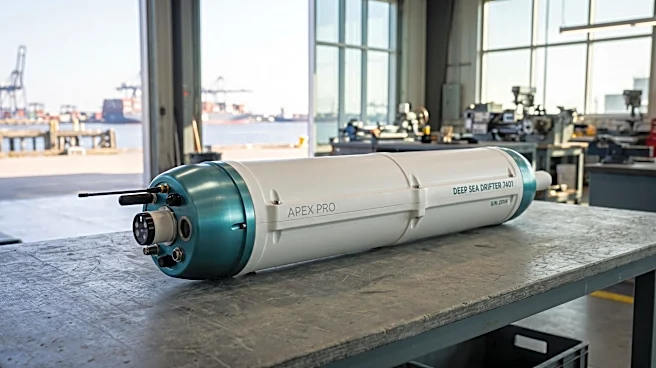
in the growing maritime unmanned-systems industry. The program aims to bring ocean technology manufacturing jobs to the Mississippi Coast. Seatrec, which currently builds ocean profiling floats in San Diego, hopes to move its production to South Mississippi and build thousands of these instruments by 2029. These 'infinite floats' collect crucial oceanographic data for forecasting, including hurricane predictions. Joseph Graben from the University of Southern Mississippi’s Office of Innovation Management noted that the Gulf Coast is becoming a significant testing ground for autonomous systems, emphasizing the need for an American-made supply chain due to security concerns, citing a case where a British company's autonomous system contained Chinese chips that transmitted data to the Chinese government.
Why It's Important?
This federal funding and the Gulf Blue program are vital for several reasons. Firstly, they promise to create new manufacturing and technology jobs on the Mississippi Coast, providing economic growth and diversification for the region. Secondly, by supporting companies like Seatrec, the initiative strengthens the domestic supply chain for critical oceanographic and autonomous systems. This is particularly important for national security, as highlighted by concerns over foreign components in sensitive defense technologies. Developing American-made sensors and related technologies reduces reliance on potentially compromised foreign supply chains, safeguarding sensitive data and technological advantages. Furthermore, the data collected by these ocean floats contributes to improved hurricane forecasting, which has significant implications for coastal communities' preparedness and safety, potentially saving lives and reducing economic damage from natural disasters.
What's Next?
The Gulf Blue supplier acceleration program will now focus on helping small businesses, including Seatrec, expand their manufacturing capacity on the Gulf Coast. Seatrec plans to consolidate its material sourcing and production in South Mississippi, with an ambitious goal of building thousands of profiling floats by 2029. The University of Southern Mississippi’s Office of Innovation Management will continue to work with companies developing sensors and technologies to ensure they meet government standards and can sell to federal agencies. This initiative is part of a broader $8.9 million allocation from the SBA across 17 states, with each organization potentially receiving up to $500,000 over two years. The success of this program could serve as a model for other regions looking to bolster their domestic manufacturing capabilities in critical technology sectors.
Beyond the Headlines
Beyond the immediate economic and security benefits, the Gulf Blue initiative signifies a strategic shift towards regional specialization in advanced technological manufacturing. The Gulf Coast's emergence as a testing ground for autonomous warfare systems suggests a long-term vision for the area to become a hub for ocean technology and defense innovation. This development could attract further investment, research, and talent to the region, fostering a robust ecosystem of related industries. The emphasis on an American-made supply chain also reflects a growing national awareness of technological sovereignty and the vulnerabilities associated with globalized production. This could lead to broader policy discussions and incentives for reshoring manufacturing in other critical sectors, ultimately reshaping the landscape of U.S. industrial policy and national security strategy.