
What's Happening?
Tesla has initiated sales of its two-seat Cybercab to a limited group of customers, with an estimated delivery date in December. The Cybercab is priced at $29,990 before taxes, and buyers are required to subscribe to Tesla's Autonomy Subscription for $299
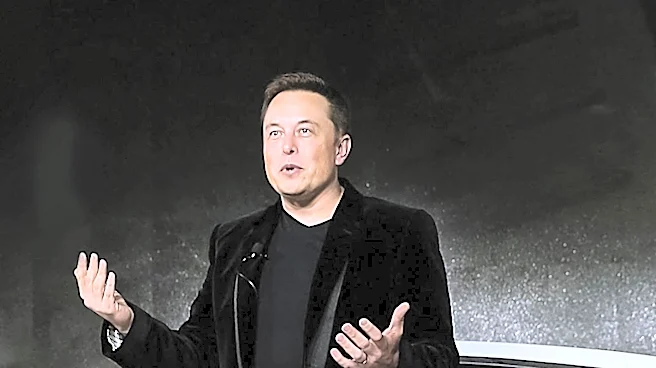
per month, with the first month included. A nonrefundable deposit of $1,000 is also required. This early-access program targets select customers within supported Robotaxi service areas, and orders are currently limited to one vehicle per buyer. The Cybercab notably lacks a steering wheel or pedals, making the autonomy software a mandatory component for its operation. Lars Moravy, Tesla’s Vice President of Vehicle Engineering, stated on a third-quarter earnings call that the company aims to deliver Cybercabs to customers by the end of 2026. Tesla's CEO, Elon Musk, indicated that the vast majority of Cybercabs will be owned and operated by Tesla, with customer-owned cars forming a minority of the fleet.
Why It's Important?
This move by Tesla marks a significant step in the company's robotaxi ambitions, transitioning from conceptual announcements to actual sales. The introduction of a vehicle without manual controls to private buyers is a novel approach in the automotive industry, highlighting Tesla's commitment to fully autonomous driving. The mandatory Autonomy Subscription establishes a recurring revenue stream for Tesla, which could be a key factor for investors. However, the high monthly subscription cost and the limited operational areas present challenges for widespread adoption. The strategy of having Tesla own and operate most of the fleet suggests a focus on a service-based model, potentially disrupting traditional car ownership. This development also puts pressure on competitors in the autonomous vehicle space, such as Waymo and Pony.ai, by introducing a direct-to-consumer option, albeit a limited one.
What's Next?
Tesla's immediate next step involves the delivery of the first Cybercabs to customers, with December being the estimated timeframe. The company is expected to provide more detailed specifications, such as battery capacity, range, and charging rates, as these are crucial for buyers. Regulatory approvals will be critical for expanding the Cybercab's availability nationwide, as indicated by Elon Musk. There is also an expectation that the subscription price may be adjusted in the future, potentially aligning with the cost of Tesla's Full Self-Driving (FSD) and connectivity for other models, which Musk suggested could be around $115 per month. The broader 2027 robotaxi push, including the potential for customer-owned Cybercabs to join the Robotaxi network, remains largely unconfirmed and will depend on further announcements and regulatory clearances.
Beyond the Headlines
The Cybercab's design, completely devoid of manual controls, raises profound questions about liability, insurance, and the future of personal transportation. In the event of an incident, determining responsibility for a vehicle without human intervention will be a complex legal and ethical challenge. Insurers will need to develop new frameworks for pricing policies for such vehicles. Furthermore, the reliance on a mandatory subscription for functionality means that ownership is tied to ongoing payments, potentially redefining the concept of vehicle ownership from a one-time purchase to a continuous service model. This could lead to a shift in consumer expectations regarding vehicle features and access. The limited initial rollout also suggests a cautious approach by Tesla, likely aimed at gathering real-world data and refining the technology before a wider release, which could influence future regulatory standards for autonomous vehicles.