





What's Happening?
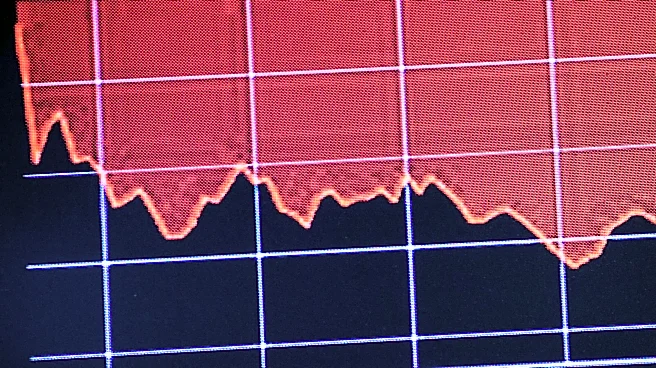
Rio Tinto Group, a globally diversified mining company, is experiencing downward pressure on its share price, which has slid 12% in the last 30 days. This decline is primarily attributed to softening copper prices, impacting the broader miner complex.
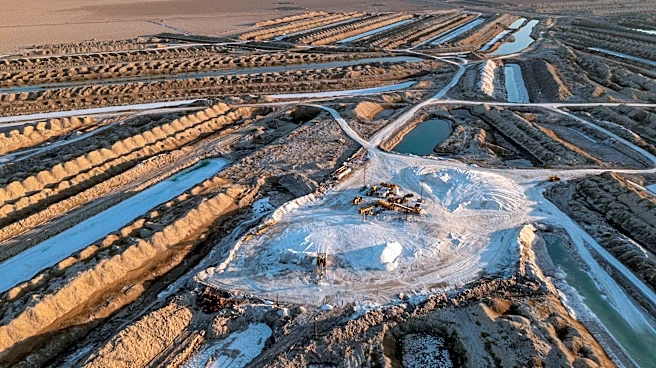
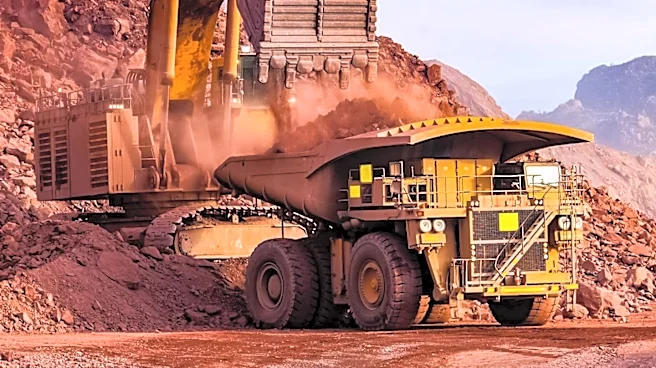
Despite this recent downturn, the company remains profitable and income-generating, offering a dividend yield exceeding 6%. Rio Tinto's operations span iron ore, aluminum and lithium, and copper segments, with major assets including Pilbara iron ore, the Escondida and Oyu Tolgoi copper mines, and hydro-powered aluminum smelters. The company recently signed a multi-year, 50-megawatt electricity agreement to restart additional capacity at its Tiwai Point aluminum smelter in New Zealand, indicating ongoing operational developments. Analyst consensus ratings for Rio Tinto generally lean towards 'buy,' even as the stock trades below its 52-week high.
Why It's Important?
The performance of major mining companies like Rio Tinto is a significant indicator for the global economy, particularly concerning commodity prices and industrial demand. Weakening copper prices, as observed with Rio Tinto, can signal broader economic slowdowns or shifts in industrial consumption patterns. For U.S. industries, this could translate to lower input costs for manufacturers relying on these metals, potentially impacting their profitability and pricing strategies. Conversely, it could also reflect reduced demand from key sectors, affecting the overall economic outlook. Investors, especially those focused on income, might find Rio Tinto's consistent profitability and dividend yield attractive despite short-term price volatility, highlighting the company's fundamental stability in a fluctuating market. The company's diversified portfolio across various metals also provides a degree of resilience against price swings in any single commodity.
What's Next?
Rio Tinto's future performance will likely be influenced by the trajectory of global commodity prices, particularly for iron ore and copper, and the demand from major markets like China. The company's ongoing projects, such as the Simandou iron ore development, the Oyu Tolgoi underground copper mine, and the Tiwai Point smelter restart, are crucial for its long-term growth. Investors will be closely watching for any signs of stabilization or recovery in metal prices, which could alleviate the current pressure on its share price. The company's ability to manage commodity-price cycles and maintain its dividend payout will be key factors in sustaining investor confidence. Further developments in its operational capacity, such as the New Zealand smelter restart, could also contribute to its financial stability and growth prospects.
Beyond the Headlines
The current share price pressure on Rio Tinto underscores the inherent cyclicality of the mining industry and its deep connection to global economic health. Beyond immediate financial implications, the company's diversified operations in critical minerals like lithium and copper are strategically important for the global energy transition. As the world moves towards renewable energy and electric vehicles, the demand for these materials is projected to increase significantly. Rio Tinto's investments in these areas position it as a key player in future industrial landscapes. However, this also exposes the company to geopolitical risks and environmental regulations associated with large-scale mining operations. The balance between maximizing shareholder returns and adhering to sustainable mining practices will be a continuous challenge, with broader implications for environmental stewardship and community relations in the regions where it operates.