
What's Happening?
Nader Mousavi, a partner at Paul, Weiss, has been instrumental in advising on artificial intelligence (AI) compute transactions exceeding $1 trillion. Mousavi, recognized as a leading technology deal lawyer,
has represented major AI companies like OpenAI and Broadcom in their most significant strategic transactions. His work includes guiding OpenAI through its landmark partnerships with Microsoft, Oracle, Amazon/AWS, Google Cloud, and CoreWeave, establishing crucial commercial and infrastructure foundations for advanced AI development and global distribution. For Broadcom, Mousavi led its $63 billion AI compute financing transaction with Bank of America, Blackstone, Citi, and Morgan Stanley, as well as the creation of its AI XPV Platform with Apollo and Blackstone, which began with a $35 billion transaction. He also advised Broadcom on its strategic collaborations with Google and Anthropic, and a partnership with OpenAI for developing and deploying custom AI accelerators. These deals highlight his central role in shaping the AI and digital infrastructure market.
Why It's Important?
Mousavi's involvement in these colossal AI transactions underscores the immense financial and strategic investments being made in artificial intelligence infrastructure. The scale of these deals, totaling over $1 trillion, signifies a pivotal moment in the technological landscape, indicating a rapid acceleration in the development and deployment of AI capabilities. These partnerships and financing agreements are critical for securing the vast computational power required to train and operate advanced AI models, which in turn drives innovation across various sectors. Companies like OpenAI and Broadcom are at the forefront of this technological revolution, and their ability to secure such significant resources through these transactions directly impacts their competitive advantage and the broader AI ecosystem. The involvement of major financial institutions and cloud providers also highlights the growing integration of AI into the global economy, positioning AI as a fundamental component of future business and technological growth.
What's Next?
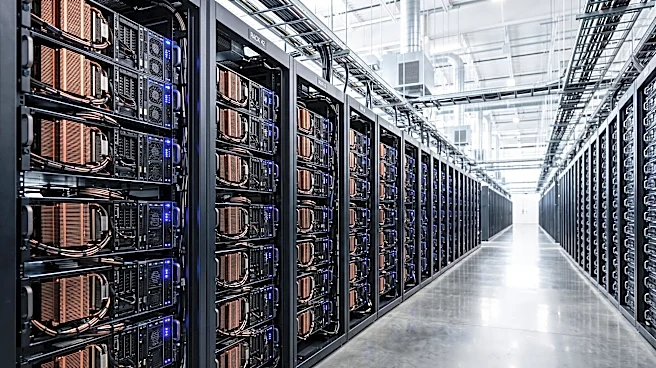
The continued structuring of multi-billion dollar AI compute deals suggests an ongoing arms race for computational resources among leading technology firms. As AI models become more complex and data-intensive, the demand for specialized hardware and cloud infrastructure will only increase. This trend is likely to drive further strategic partnerships between AI developers, semiconductor manufacturers, and cloud service providers. We can anticipate more significant financing rounds and collaborations aimed at building out vast AI data centers and developing next-generation AI accelerators. The legal and financial frameworks established by these initial mega-deals will likely serve as precedents for future transactions, influencing how AI infrastructure is funded, developed, and deployed globally. The focus will remain on securing sufficient compute capacity to maintain competitive edges and push the boundaries of AI capabilities.
Beyond the Headlines
The sheer volume of capital flowing into AI compute infrastructure raises profound questions about market concentration and the future of technological power. With a few major players securing massive computational resources, there's a potential for an oligopoly in AI development, which could impact innovation, accessibility, and ethical considerations. The reliance on specialized legal expertise, as demonstrated by Nader Mousavi's role, highlights the increasing complexity of these transactions, involving intricate intellectual property, regulatory, and financial considerations. Furthermore, the environmental impact of these massive AI data centers, requiring gigawatts of power, will become a more pressing concern, potentially driving innovation in sustainable computing and energy solutions. These deals are not just about technology; they are shaping the economic, geopolitical, and environmental landscape of the 21st century.