



What's Happening?
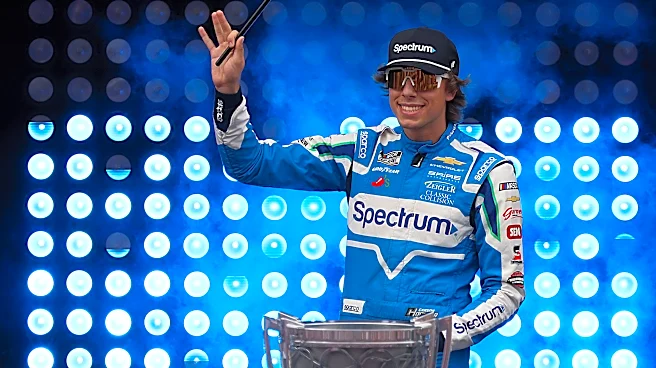
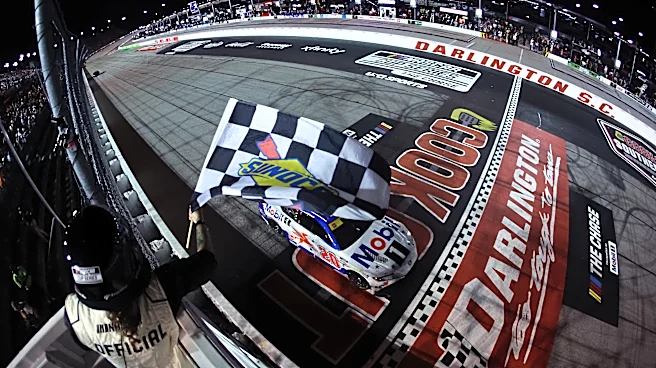
NASCAR legend Dale Earnhardt Jr. has offered a nuanced and somewhat unpopular opinion regarding Carson Hocevar's aggressive driving style, particularly after Hocevar spun Brad Keselowski at Darlington. While many, including Denny Hamlin and Jeff Burton,
have criticized Hocevar and Spire Motorsports, Dale Jr. admitted his reaction would depend on his personal relationships with the drivers involved. He stated that if Hocevar had impacted a close friend like Ryan Blaney or a Hendrick Motorsports car, his perspective would be different. This stance highlights the personal biases that can influence opinions within the close-knit NASCAR community, contrasting with more objective criticisms of Hocevar's on-track conduct.
Why It's Important?
Dale Earnhardt Jr.'s comments are significant because they shed light on the complex dynamics and personal relationships that exist within professional sports, particularly NASCAR. His honesty reveals that even seasoned commentators and former competitors can have their views shaped by personal connections rather than purely objective analysis of racing incidents. This perspective challenges the notion of universal impartiality in sports commentary and highlights the human element in how controversies are perceived and discussed. It also underscores the pressure on drivers like Hocevar, whose aggressive style generates both criticism and a unique fan following, impacting team reputations and sponsor relations within the sport.
What's Next?
The ongoing debate surrounding Carson Hocevar's aggressive driving is likely to continue, with his future performances and interactions on the track being closely scrutinized. Dale Jr.'s comments may spark further discussion among fans and analysts about the role of personal relationships in sports commentary. Spire Motorsports will face continued pressure to manage Hocevar's conduct, balancing his competitive edge with the need for sportsmanship. Other drivers, particularly those with strong opinions like Denny Hamlin, may continue to voice their concerns, potentially leading to more on-track rivalries and heightened tensions in upcoming races. The situation could also influence how NASCAR officials address aggressive driving in the future.
Beyond the Headlines
Beyond the immediate racing implications, this situation touches on broader themes of ethics, personal integrity, and the nature of competition in high-stakes environments. Dale Jr.'s candid admission about his biases raises questions about the objectivity of sports media and the influence of personal networks. It also highlights the fine line between aggressive, competitive driving and reckless behavior, a debate that frequently arises in motorsports. The controversy surrounding Hocevar reflects a cultural tension between celebrating bold, uncompromising athletes and upholding standards of fair play and respect. This ongoing discussion contributes to the evolving identity of NASCAR and its values.