



What's Happening?
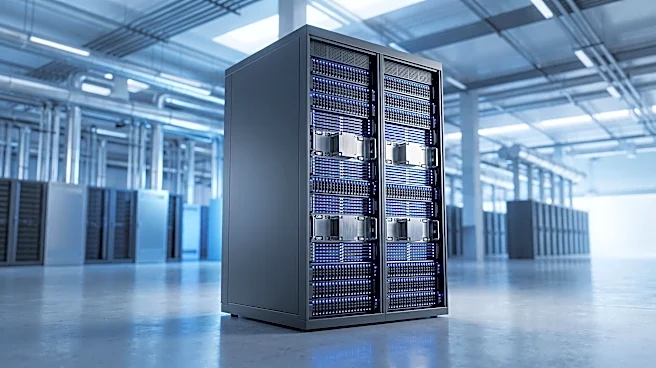
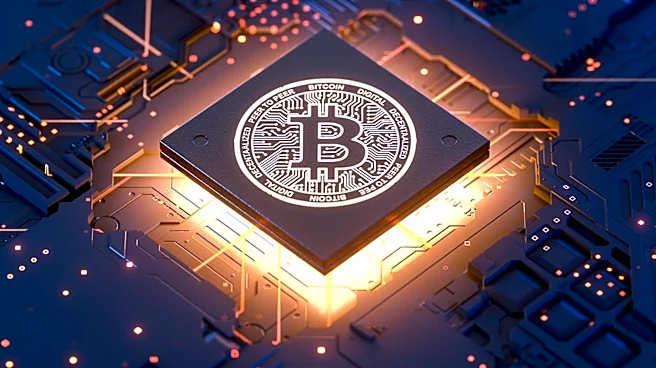
Bitcoin mining companies, including MARA Holdings and TeraWulf (WULF), are strategically shifting their business models from solely Bitcoin mining to operating energy-backed data centers that support artificial intelligence (AI) and high-performance computing
(HPC) workloads. This transition is driven by the potential for more stable and diversified revenue streams. For instance, WULF's Lake Mariner campus is moving towards data-center operations, with HPC lease revenue now constituting approximately 83% of its total revenue. Google has also provided investment-grade credit support for a significant 20-year Anthropic lease at WULF's Justified campus, aiming to reduce financing risks. MARA, while still heavily reliant on Bitcoin mining, is also pursuing data-center leases and has secured regulatory clearance for a power-plant acquisition, indicating a similar strategic direction. This shift is leading to a mixed financial picture for these companies as they navigate the transition.
Why It's Important?
This strategic pivot by Bitcoin miners into AI infrastructure is significant for several reasons. It represents a diversification of revenue for companies previously exposed primarily to the volatile cryptocurrency market, potentially leading to more stable financial performance. The move into HPC and AI data centers positions these companies to capitalize on the growing demand for computing power driven by AI development. For the broader U.S. economy, this trend could contribute to the expansion of AI infrastructure, supporting technological advancements and innovation. Companies like WULF, with secured HPC contracts and investment-grade backing, demonstrate a model for mitigating risk and ensuring revenue visibility. Conversely, companies like MARA, still in the early stages of this transition, face a more uncertain path, with their success dependent on the materialization of new leases and acquisitions. This shift also highlights the increasing convergence of energy infrastructure, digital assets, and advanced computing.
What's Next?
The coming quarters will likely see continued efforts by Bitcoin miners to expand their AI and HPC infrastructure. For companies like MARA, the focus will be on securing pending data-center leases and integrating the Long Ridge power-plant acquisition to solidify their AI catalyst. WULF will concentrate on the execution and construction of its contracted HPC projects, aiming to achieve its goal of approximately $700 million in annualized leasing revenue by early 2027. The financial statements of these companies will be closely watched for signs of increasing AI revenue and reduced reliance on Bitcoin price fluctuations. The market will also observe how these companies finance their AI build-outs, with some potentially continuing to sell Bitcoin to fund these expansions. The success of these transitions will determine their long-term viability and competitive positioning in both the digital asset and AI infrastructure sectors.
Beyond the Headlines
The shift of Bitcoin miners into AI infrastructure has deeper implications beyond immediate financial performance. It underscores the increasing demand for high-density computing power, which is a fundamental requirement for the advancement of AI. This trend could lead to a more efficient utilization of existing energy infrastructure, as facilities initially built for energy-intensive Bitcoin mining are repurposed for AI workloads. It also raises questions about the environmental impact of such large-scale computing operations, particularly concerning energy consumption and cooling requirements. Furthermore, the involvement of major tech players like Google in financing these ventures suggests a growing recognition of the critical role that specialized data centers play in the AI ecosystem. This convergence could foster new partnerships and business models at the intersection of energy, finance, and technology, potentially reshaping the landscape of digital infrastructure.