








What's Happening?
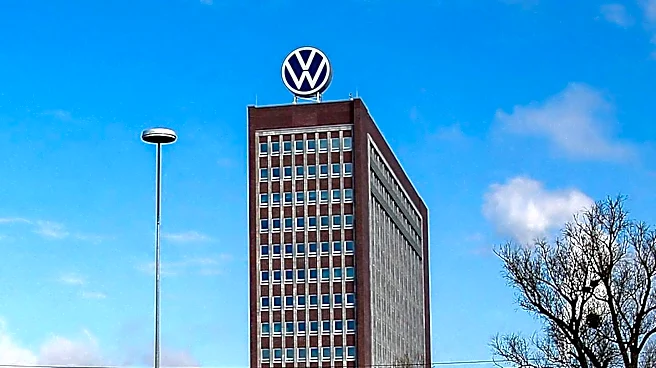
Volkswagen is undergoing its most extensive restructuring in history, which includes potential job cuts for up to 100,000 employees, plant closures, and the implementation of a 'Future Plan 2030' cost program. This comes as the company's Q3 2026 financial
results revealed a decline in revenue from €80,305 million to €75,277 million. The company also reported a deeper loss in profit and a significant drop in net margin from -0.6% to -6.2%. These figures have cast doubt on the optimistic profitability projections that were previously anticipated, particularly concerning the contributions from electrified vehicles and digital services. The company's shares have experienced a 30.2% loss since the beginning of the year, trading at €69.62.
Why It's Important?
This financial downturn and the aggressive restructuring efforts by Volkswagen signal significant challenges within the automotive industry, particularly as it navigates the transition to electric vehicles and digital services. The unproven profitability of Volkswagen's electrification strategy could influence investment decisions and strategic directions for other major U.S. and international automakers. The potential for massive job cuts and plant closures highlights the economic impact on communities and the workforce, potentially leading to increased unemployment and shifts in regional economies. For consumers, the company's focus on a leaner cost base and a more competitive EV lineup could eventually lead to more affordable or technologically advanced electric vehicles, but the immediate future suggests a period of instability and uncertainty for one of the world's largest car manufacturers.
What's Next?
Volkswagen's board has agreed on tough reforms aimed at stabilizing the business after a challenging reset. The company is now relying on regaining market share through a leaner cost base and a more competitive electric vehicle (EV) lineup. The current bullish narrative suggests that the fair value of the shares is above the current trading price, assuming these reforms can successfully turn the company's fortunes around. However, the market is awaiting concrete evidence that Volkswagen can prevail against increasing competition, particularly from Chinese manufacturers. The company's strategy also involves exploring new revenue streams by integrating software and digital services into vehicles, aiming to convert hardware sales into long-term digital and connected service income. This shift could redefine the business model for the automotive sector, moving beyond traditional manufacturing to a more service-oriented approach.
Beyond the Headlines
The challenges faced by Volkswagen extend beyond immediate financial performance, touching upon fundamental shifts in the automotive industry. The company's struggle to achieve profitability in its electric vehicle and digital services segments underscores a broader industry-wide dilemma: how to effectively monetize new technologies and business models. This situation highlights the ethical considerations surrounding large-scale job cuts and the impact on employee livelihoods, as well as the cultural shift required within a legacy automaker to adapt to a rapidly evolving technological landscape. The emphasis on software and digital services suggests a future where cars are not just modes of transport but platforms for continuous revenue generation, potentially leading to new legal frameworks for data privacy and ownership within vehicles. This transformation could also trigger long-term shifts in consumer expectations, moving towards subscription-based services and integrated digital experiences in their vehicles.