





What's Happening?
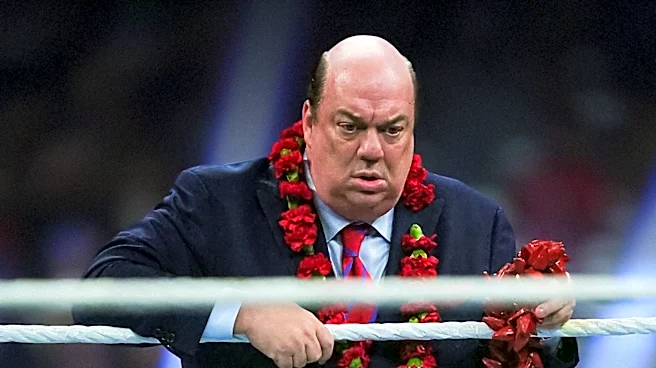
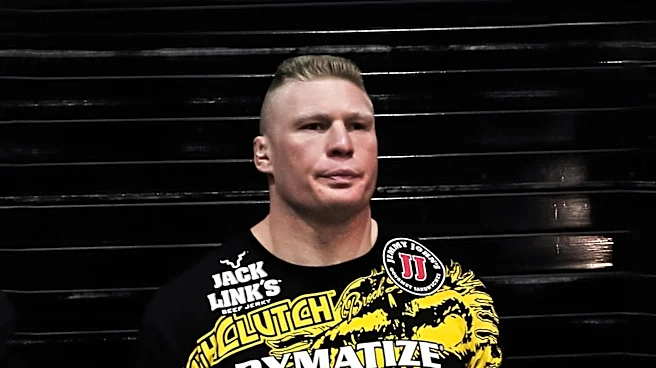
Paul Heyman, the long-time 'Advocate' for Brock Lesnar, recently asserted that Lesnar would have maintained an undefeated record and remained the UFC Heavyweight Champion to this day, had he not been afflicted with diverticulitis. Heyman, a WWE Hall of
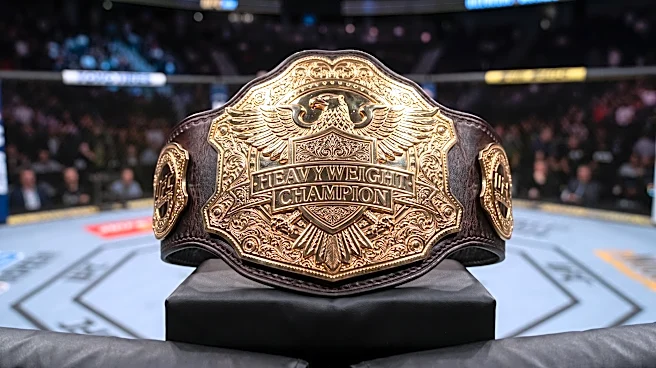
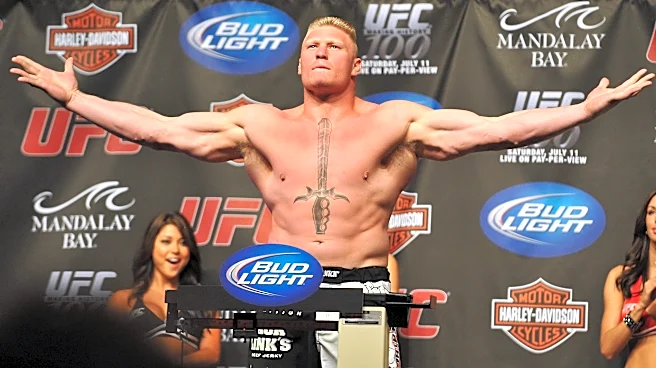
Famer, made these comments during an interview with Graham Bensinger, emphasizing Lesnar's athletic prowess. Lesnar, who transitioned from professional wrestling to mixed martial arts, achieved UFC Heavyweight Champion status with a record of five wins, three losses, and one no contest. Heyman believes that the health condition significantly curtailed Lesnar's potential in the MMA world, suggesting that without it, no opponent would have been able to defeat him, even at 49 years old. This statement has generated discussion within the wrestling community and among fans, with some backstage WWE personnel viewing Heyman's remarks as part of his promotional role.
Why It's Important?
Heyman's comments are significant as they highlight the perceived impact of health issues on an athlete's career trajectory and legacy. For Brock Lesnar, a prominent crossover star between professional wrestling and mixed martial arts, the narrative surrounding his UFC career is often debated. Heyman's strong assertion attempts to reframe Lesnar's MMA history, attributing his losses and eventual departure from the sport primarily to diverticulitis rather than athletic shortcomings. This perspective could influence how fans and analysts view Lesnar's overall combat sports achievements. Furthermore, the backstage WWE reaction, which largely interprets Heyman's statements as 'promoter mode,' underscores the theatrical and narrative-driven aspects of professional wrestling, where blurring the lines between reality and kayfabe (staged events) is common practice to enhance a performer's image and mystique.
What's Next?
While Heyman's comments are unlikely to alter Lesnar's past UFC record, they contribute to the ongoing discussion about Lesnar's place in combat sports history. The remarks may fuel further debate among fans and pundits regarding 'what if' scenarios in sports, particularly concerning athletes whose careers were impacted by unforeseen circumstances like health issues. For WWE, Heyman's continued role as a compelling orator and advocate means he will likely continue to shape narratives around his clients, maintaining their larger-than-life personas. The comments also serve as a reminder of the promotional strategies employed in professional wrestling to keep top stars relevant and their legacies formidable, even after their active competition in certain arenas has concluded.
Beyond the Headlines
The deeper implication of Heyman's statement touches upon the nature of athletic greatness and the role of external factors in defining it. It raises questions about how much an athlete's potential is truly realized versus how much is curtailed by elements beyond their control, such as health. In the world of combat sports, where physical peak performance is paramount, a condition like diverticulitis can be career-altering. Heyman's narrative, while promotional, also serves to protect and elevate Lesnar's image, suggesting an almost mythical invincibility that was only broken by illness, not by a superior opponent. This kind of storytelling is crucial in professional wrestling, where character perception often outweighs factual record, influencing fan engagement and the long-term marketability of a star.