




What's Happening?
Oklo, a U.S.-based nuclear start-up, and Centrus Energy have finalized multi-year contracts for the supply of high-assay low-enriched uranium (HALEU) fuel. These agreements are designated for Oklo’s planned 1.2 GWe power campus in Ohio, securing enough
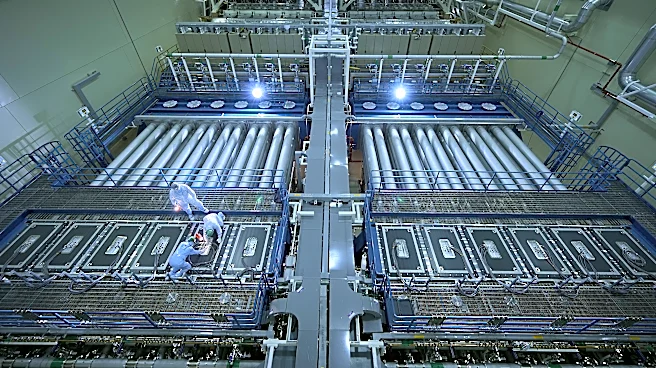
fuel for up to five Aurora powerhouses for several years. Deliveries are slated to commence in 2029. The HALEU will be produced at Centrus’s American Centrifuge Plant located in Pike County, Ohio. Oklo’s Aurora reactor, a liquid metal-cooled, metal-fueled fast reactor, draws on the operational legacy of the Experimental Breeder Reactor II (EBR-II) at Idaho National Laboratory (INL). The U.S. Department of Energy (DOE) approved Oklo’s Preliminary Documented Safety Analysis (PDSA) in June. Oklo plans to operate under a build-own-operate model, providing electricity and heat through long-term Power Purchase Agreements (PPAs). The initial deployment, Aurora-INL, will serve as a commercial launchpad before expanding the fleet. Oklo will source its initial fuel assemblies from the Aurora Fuel Fabrication Facility (A3F), which received its own PDSA approval in December 2025.
Why It's Important?
These contracts are crucial for advancing the commercialization of advanced nuclear technology in the U.S. The secured HALEU fuel supply addresses a critical component for Oklo's Ohio power campus, which aims to provide clean, reliable power to the PJM grid, specifically supporting Meta Platforms' data center operations. The financial backing from Meta Platforms, through prepayments for future power production, highlights growing corporate interest in sustainable energy solutions and helps de-risk early-stage nuclear projects. Furthermore, Oklo's prepayments to Centrus will aid in funding the construction of new U.S. uranium enrichment capacity, accelerating Centrus’s commercial centrifuge manufacturing expansion. This initiative is vital for restoring America's leadership in uranium enrichment and strengthening the domestic nuclear fuel supply chain, reducing reliance on foreign sources. The development signifies a tangible step towards deploying advanced nuclear reactors, which are seen as essential for achieving carbon-free electricity goals and enhancing energy security.
What's Next?
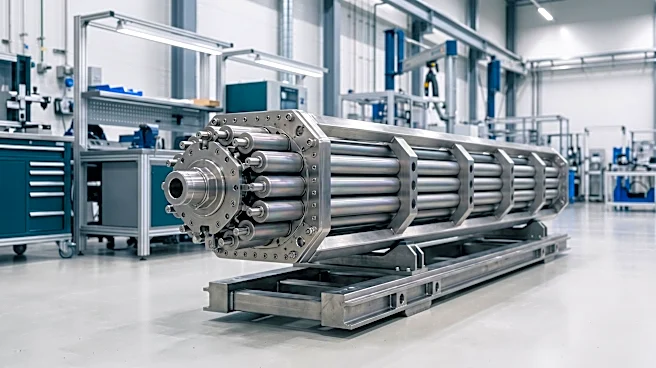
Fuel deliveries from Centrus to Oklo are scheduled to begin in 2029, supporting the operational timeline for the Ohio power campus. Oklo's initial deployment at INL, Aurora-INL, is expected to serve as a commercial launchpad, with plans to scale up a wider fleet of Aurora powerhouses. The HALEU supply will not only fuel the initial Ohio deployment but also support future Aurora projects and the eventual refueling of Aurora-INL. Centrus is actively expanding its commercial centrifuge manufacturing, with new centrifuges already being shipped to Ohio, backed by significant customer contracts. Oklo CEO Jacob DeWitte emphasized that securing fuel is essential for scaling the company's power business beyond its first reactor in Idaho. The collaboration between Oklo, Centrus, and Meta Platforms sets a precedent for future partnerships aimed at accelerating the deployment of advanced nuclear energy solutions in the U.S.
Beyond the Headlines
The definitive agreements between Oklo and Centrus, coupled with Meta Platforms' financial support, underscore a significant shift in the energy landscape, where private sector investment is increasingly driving the development and deployment of advanced nuclear technologies. This model of long-term power purchase agreements (PPAs) with major corporations like Meta could become a blueprint for financing future nuclear projects, moving away from traditional utility-centric models. The focus on HALEU production within the U.S. also has profound implications for national security and energy independence, reducing vulnerabilities associated with global supply chain disruptions. The re-establishment of domestic enrichment capabilities could foster a more robust and resilient nuclear energy sector, positioning the U.S. as a leader in advanced reactor technology and its associated fuel cycle. This development also highlights the growing demand for reliable, carbon-free energy from energy-intensive industries like data centers, pushing for innovative solutions beyond traditional renewable sources.